Table of Contents
ToggleBest Hyperlocal Marketing Strategies: The Ultimate Guide to Winning Local Customers in 2025
In an era where consumers expect instant, relevant, and personalized experiences, hyperlocal marketing has emerged as one of the most powerful strategies for businesses targeting nearby customers. Instead of broadcasting generic messages to a wide audience, hyperlocal marketing focuses on engaging people within a very specific geographic area—sometimes as small as a street, neighborhood, or pin code.
From small local businesses to national brands with multiple outlets, hyperlocal marketing helps drive foot traffic, build trust, and increase conversions. This comprehensive guide explores the best hyperlocal marketing strategies, tools, benefits, examples, challenges, and future trends to help you dominate your local market in 2025 and beyond.
What Is Hyperlocal Marketing?
Hyperlocal marketing is a digital marketing approach that targets potential customers within a narrowly defined geographic area using highly localized messaging. It combines location data, mobile technology, and local intent to deliver relevant content, ads, and offers.
Examples of Hyperlocal Marketing:
-
A restaurant promoting lunch offers to people within a 1 km radius
-
A gym targeting residents of a specific housing society
-
A retail store advertising discounts to shoppers near its outlet
-
A clinic targeting patients searching “doctor near me”
Why Hyperlocal Marketing Is Important in 2025
Consumer behavior has shifted dramatically toward local discovery. Searches like “near me,” “open now,” and “best shop nearby” have increased exponentially. With mobile devices and location services, businesses can now reach customers at the exact moment of intent.
Key Reasons Hyperlocal Marketing Matters:
-
Growth of mobile and voice searches
-
Rising competition in local markets
-
Increased demand for personalized experiences
-
Cost-effective advertising
-
Higher conversion rates than broad targeting
Studies show that hyperlocal campaigns can deliver 2–3x higher engagement compared to traditional local advertising.
How Hyperlocal Marketing Works
Hyperlocal marketing leverages multiple data sources and platforms to target users precisely.
Key Components:
-
Location Data: GPS, IP address, Wi-Fi, mobile apps
-
Local Intent Signals: “Near me” searches, map activity
-
Targeting Technology: Geo-targeting, geo-fencing, proximity marketing
-
Localized Messaging: Area-specific offers, language, culture
-
Tracking & Analytics: Foot traffic, store visits, conversions
Types of Hyperlocal Marketing
1. Geo-Targeting
Geo-targeting focuses on specific locations such as cities, pin codes, or neighborhoods.
Best for:
-
Service businesses
-
Local retailers
-
Regional campaigns
2. Geo-Fencing
Geo-fencing creates a virtual boundary around a location. When users enter or exit that area, ads or notifications are triggered.
Best for:
-
Retail stores
-
Competitor targeting
-
Events and exhibitions
3. Proximity Marketing
Proximity marketing targets users who are physically close to a business location.
Best for:
-
Restaurants and cafes
-
Quick-service outlets
-
Local offers and flash sales
4. Location-Based Search Marketing
Targets users searching for local services using Google Search and Maps.
Best for:
-
Clinics
-
Salons
-
Home services
-
Coaching centers
Best Hyperlocal Marketing Strategies
1. Optimize Google Business Profile (GBP)
A well-optimized Google Business Profile is the foundation of hyperlocal marketing.
Best Practices:
-
Accurate business name, address, phone number
-
High-quality images and videos
-
Regular posts and updates
-
Responding to reviews
-
Local keywords in description
2. Run Hyperlocal Google Ads
Google Ads allows radius-based and pin-drop targeting.
Effective Campaign Types:
-
Local search ads
-
Google Maps ads
-
Call-only ads
-
Local service ads
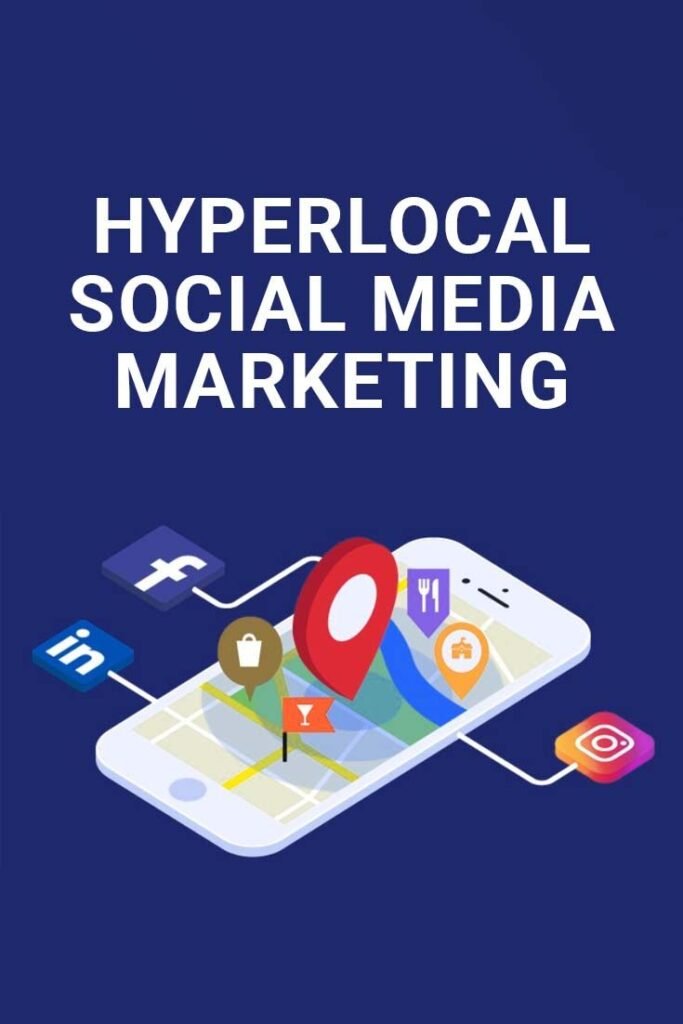
3. Hyperlocal Social Media Advertising
Platforms like Facebook and Instagram offer advanced local targeting options.
Strategies:
-
Radius targeting (1–5 km)
-
Local awareness campaigns
-
City-specific creatives
-
Time-based promotions
4. Create Localized Content
Content tailored to specific locations builds trust and authority.
Content Ideas:
-
Area-specific landing pages
-
Local blogs and guides
-
Neighborhood success stories
-
Local event coverage
5. Leverage Local SEO
Local SEO ensures your business appears in relevant local searches.
Key Elements:
-
Local keywords
-
NAP consistency
-
Local backlinks
-
Online directories
-
Customer reviews
6. Use Hyperlocal Influencer Marketing
Local influencers and micro-creators have strong community trust.
Benefits:
-
Authentic engagement
-
Cost-effective campaigns
-
Strong local reach
7. SMS and WhatsApp Hyperlocal Marketing
Messaging apps are extremely effective for local promotions.
Use Cases:
-
Flash offers
-
Event invitations
-
Appointment reminders
-
Local announcements
Hyperlocal Marketing for Small Businesses
Hyperlocal marketing is especially powerful for small and medium businesses.
Why It Works:
-
Low advertising budgets
-
High purchase intent
-
Immediate foot traffic
-
Strong word-of-mouth
Best Channels:
-
Google Maps
-
Local Facebook ads
-
WhatsApp campaigns
-
Local directories
Hyperlocal Marketing for Multi-Location Brands
Large brands use hyperlocal marketing to maintain consistency while customizing local messaging.
Strategies:
-
Location-specific ad creatives
-
Store-level analytics
-
Local inventory ads
-
Franchise marketing automation
Industries That Benefit Most from Hyperlocal Marketing
-
Restaurants and cafes
-
Retail stores
-
Real estate
-
Healthcare and clinics
-
Education and coaching institutes
-
Home services
-
Fitness centers
-
Automotive services
Measuring Hyperlocal Marketing Success
Key Metrics:
-
Local search rankings
-
Click-through rate (CTR)
-
Store visits
-
Calls and direction requests
-
Conversion rate
-
Cost per lead (CPL)
Tools:
-
Google Analytics
-
Google Business Profile Insights
-
Google Ads reports
-
CRM systems
Challenges in Hyperlocal Marketing
-
Limited audience size
-
Location accuracy issues
-
Ad fatigue
-
Managing multiple locations
-
Privacy and consent regulations
These challenges can be addressed through testing, optimization, and ethical data usage.
Best Practices for Hyperlocal Marketing
-
Start with a small targeting radius
-
Use localized ad copy and visuals
-
Test different offers and creatives
-
Keep business information consistent
-
Encourage customer reviews
Hyperlocal Marketing vs Local Marketing
| Aspect | Local Marketing | Hyperlocal Marketing |
|---|---|---|
| Target Area | City or region | Neighborhood or radius |
| Personalization | Moderate | Very high |
| Cost | Higher | Lower |
| Conversion Rate | Medium | High |
Future Trends in Hyperlocal Marketing
1. AI-Powered Hyperlocal Targeting
2. Voice Search and “Near Me” Optimization
3. Augmented Reality Local Ads
4. Privacy-First Location Marketing
5. Omnichannel Hyperlocal Experiences
Conclusion
Hyperlocal marketing is one of the most effective ways to attract, engage, and convert nearby customers in a mobile-first world. By delivering highly relevant messages to people in specific locations, businesses can significantly improve ROI, build stronger community relationships, and gain a competitive edge.
Whether you are a small local business or a multi-location brand, investing in the best hyperlocal marketing strategies will help you own your neighborhood, increase foot traffic, and drive sustainable growth in 2025 and beyond.