Table of Contents
TogglePaid Ads vs Organic Marketing: The Ultimate 3000-Word Guide to Choosing the Right Growth Strategy
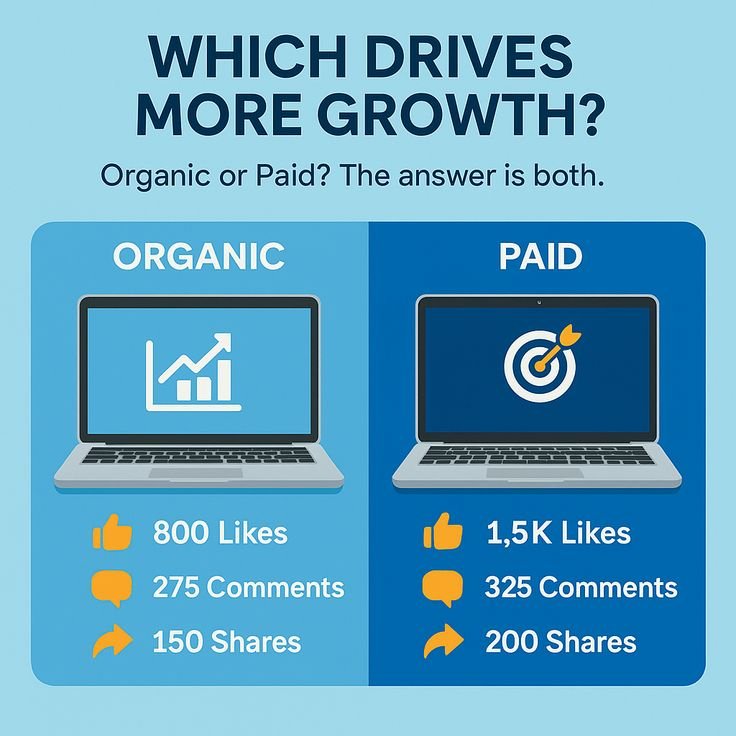
Introduction: Paid Ads vs Organic Marketing – Which One Truly Wins?
Every business wants traffic, leads, and sales. The big question marketers face is:
👉 Should you invest in paid ads or focus on organic marketing?
Both paid advertising and organic marketing are powerful growth strategies—but they work in very different ways. One delivers instant visibility, while the other builds long-term authority. One stops the moment you stop paying, while the other keeps working for years.
In today’s competitive digital landscape, understanding the difference between paid ads and organic marketing is essential for making smart marketing decisions. Choosing the wrong strategy—or relying too heavily on just one—can waste budget, time, and opportunities.
In this detailed guide, you’ll learn:
-
What paid ads and organic marketing are
-
Key differences between paid and organic strategies
-
Pros and cons of each approach
-
Cost, ROI, and scalability comparison
-
Which strategy is best for startups, SMEs, and brands
-
How to combine paid ads and organic marketing for maximum growth
Let’s break it all down clearly and practically.
1. What Is Paid Advertising?
Paid advertising refers to any marketing strategy where you pay platforms to show your content or ads to a targeted audience.
Common Types of Paid Ads:
-
Google Search Ads
-
Google Display Ads
-
YouTube Ads
-
Facebook & Instagram Ads
-
LinkedIn Ads
-
Twitter (X) Ads
-
Native ads
-
Influencer paid promotions
With paid ads, you essentially buy visibility.
1.1 How Paid Ads Work
Paid advertising operates on auction-based models such as:
-
Cost Per Click (CPC)
-
Cost Per Impression (CPM)
-
Cost Per Lead (CPL)
-
Cost Per Acquisition (CPA)
Advertisers bid for ad placements, and platforms decide:
-
Who sees your ad
-
When it’s shown
-
How much you pay
2. What Is Organic Marketing?
Organic marketing focuses on attracting customers naturally over time, without directly paying for clicks or impressions.
Common Organic Marketing Channels:
-
Search Engine Optimization (SEO)
-
Content marketing (blogs, guides, videos)
-
Social media posts (non-paid)
-
Email marketing
-
Community building
-
Brand authority & PR
Organic marketing is about earning attention, not buying it.
2.1 How Organic Marketing Works
Organic marketing relies on:
-
High-quality content
-
Search engine rankings
-
User trust
-
Consistency over time
Instead of instant results, it builds long-term digital assets.
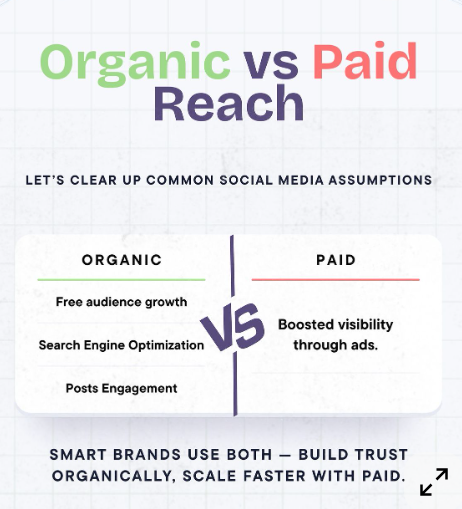
3. Paid Ads vs Organic Marketing: Core Differences
| Factor | Paid Ads | Organic Marketing |
|---|---|---|
| Speed | Instant results | Slow but steady |
| Cost | Ongoing spend | Low direct cost |
| Sustainability | Stops when budget stops | Long-term |
| Trust | Lower | Higher |
| Scalability | Fast | Gradual |
| Competition | High | Moderate |
| ROI timeline | Short-term | Long-term |
4. Advantages of Paid Advertising
4.1 Instant Visibility
Paid ads can place your brand:
-
At the top of Google
-
In social media feeds
-
In front of your ideal audience instantly
Perfect for:
-
New launches
-
Promotions
-
Seasonal campaigns
4.2 Highly Targeted Reach
Paid platforms allow targeting based on:
-
Age, gender, location
-
Interests and behaviors
-
Keywords and intent
-
Retargeting past visitors
This precision makes paid ads extremely powerful.
4.3 Predictable & Measurable Results
With paid ads, you can track:
-
Clicks
-
Conversions
-
Cost per lead
-
ROI
This makes optimization easier and faster.
4.4 Scalable Growth
If an ad campaign works:
-
Increase budget
-
Increase reach
-
Increase sales
Paid ads scale quickly.
5. Disadvantages of Paid Advertising
5.1 Expensive in the Long Run
As competition increases:
-
CPC rises
-
CPA increases
-
Margins shrink
Popular industries pay very high ad costs.
5.2 Results Stop When Spending Stops
No budget = no traffic.
Paid ads don’t create lasting assets.
5.3 Ad Fatigue & Banner Blindness
Users increasingly:
-
Ignore ads
-
Block ads
-
Distrust sponsored content
Performance can decline over time.
5.4 Requires Continuous Optimization
Paid ads need:
-
Constant testing
-
Creative updates
-
Bid adjustments
Poor management leads to wasted spend.
6. Advantages of Organic Marketing
6.1 Long-Term Traffic & ROI
Once your content ranks:
-
Traffic continues for months or years
-
Cost per lead decreases over time
Organic marketing compounds.
6.2 Higher Trust & Credibility
Users trust:
-
Google organic results
-
Educational blogs
-
Helpful content
Organic visibility builds brand authority.
6.3 Cost-Effective Growth
While organic marketing requires effort and time:
-
No cost per click
-
No bidding wars
-
Lower long-term investment
6.4 Supports the Entire Funnel
Organic content helps with:
-
Awareness
-
Consideration
-
Decision-making
-
Retention
It nurtures users naturally.
7. Disadvantages of Organic Marketing
7.1 Slow Results
SEO and content marketing take:
-
Weeks or months to show results
-
Continuous effort
Not ideal for immediate sales.
7.2 Algorithm Dependency
Organic traffic depends on:
-
Google updates
-
Social platform algorithms
Poor practices can lead to ranking drops.
7.3 Requires Consistency & Expertise
Successful organic marketing needs:
-
SEO knowledge
-
Content strategy
-
Patience
Inconsistent effort leads to poor results.
8. Paid Ads vs Organic Marketing: Cost Comparison
Paid Ads Cost:
-
Daily or monthly ad spend
-
Management fees
-
Creative costs
💰 High recurring cost
Organic Marketing Cost:
-
Content creation
-
SEO tools
-
Time & resources
💰 Lower recurring cost, higher upfront effort
9. ROI Comparison: Paid Ads vs Organic Marketing
Paid Ads ROI:
-
Faster returns
-
Short-term wins
-
High control
Organic Marketing ROI:
-
Slower start
-
Long-term exponential returns
-
Strong brand equity
Best ROI strategy = balance both.
10. Paid Ads vs Organic Marketing for Startups
Best Approach for Startups:
-
Use paid ads for quick traction
-
Build organic content alongside
This ensures:
-
Immediate visibility
-
Long-term sustainability
11. Paid Ads vs Organic Marketing for Small Businesses
Small businesses benefit most from:
-
Local SEO
-
Content marketing
-
Selective paid ads
Organic marketing reduces dependency on ad budgets.
12. Paid Ads vs Organic Marketing for Large Brands
Large brands should:
-
Dominate organic search
-
Use paid ads for scale and retargeting
-
Protect branded keywords
A hybrid strategy maximizes market share.
13. When Should You Use Paid Ads?
Paid ads are ideal when:
-
You need instant traffic
-
You’re launching a product
-
You want fast lead generation
-
You’re running time-sensitive offers
14. When Should You Focus on Organic Marketing?
Organic marketing is ideal when:
-
You want sustainable growth
-
You’re building authority
-
You want lower long-term costs
-
You want trust and credibility
15. Combining Paid Ads and Organic Marketing (Best Strategy)
The smartest brands don’t choose one—they combine both.
How to Combine Effectively:
-
Use paid ads to test keywords
-
Turn winning keywords into SEO content
-
Retarget organic visitors with ads
-
Promote high-performing blogs via paid ads
This creates a powerful growth loop.
16. SEO vs PPC: A Deeper Look
| Aspect | SEO (Organic) | PPC (Paid) |
|---|---|---|
| Traffic Source | Earned | Bought |
| Longevity | Long-term | Short-term |
| Trust | High | Medium |
| Control | Low | High |
| Cost Efficiency | High over time | Lower over time |
17. Paid Social vs Organic Social Marketing
-
Paid social = reach fast, target precisely
-
Organic social = build community and loyalty
Best results come from using both.
18. Common Myths About Paid vs Organic Marketing
❌ Paid ads are better than SEO
❌ Organic marketing is free
❌ SEO is dead
❌ Paid ads guarantee sales
✅ Truth: Both require strategy and execution.
19. Future of Paid Ads and Organic Marketing
Paid Ads Trends:
-
Higher costs
-
More AI-driven targeting
-
Increased competition
Organic Marketing Trends:
-
EEAT-focused content
-
Experience-driven SEO
-
Long-form, helpful content
Organic trust will become even more valuable.
20. Which Is Better: Paid Ads or Organic Marketing?
The real answer:
👉 Neither alone.
-
Organic marketing gives stability
Businesses that rely only on paid ads struggle with rising costs. Businesses that rely only on organic marketing grow slowly.
The winners use both strategically.
Conclusion: Paid Ads vs Organic Marketing – The Smart Way Forward
Paid ads and organic marketing are not competitors—they are partners. Paid ads help you move fast, while organic marketing helps you build strong foundations.
Final Takeaways:
✅ Paid ads = instant results
✅ Organic marketing = long-term growth
✅ Paid stops when budget stops
✅ Organic compounds over time
✅ Best strategy = integrated approach
If you want sustainable, scalable, and profitable growth, invest in organic marketing while using paid ads to accelerate results.