Table of Contents
ToggleAI vs Traditional Marketing: A Complete Comparison for Modern Businesses
Introduction: Marketing at a Crossroads
Marketing has always evolved with technology. From print ads and billboards to television, radio, and digital platforms, every era has brought new tools and approaches. Today, marketing stands at another major turning point—the rise of Artificial Intelligence (AI).
Traditional marketing, built on human creativity, intuition, and experience, has shaped some of the world’s most iconic brands. At the same time, AI-powered marketing is redefining how businesses analyze data, personalize experiences, automate campaigns, and predict customer behavior.
This has created a fundamental question for businesses worldwide:
AI vs Traditional Marketing — which approach is better?
The answer is not simple. Each has strengths, weaknesses, and ideal use cases. This blog provides a deep, practical comparison of AI marketing and traditional marketing, helping you understand how both work, where they differ, and what the future holds.
Understanding Traditional Marketing
Traditional marketing refers to marketing strategies that rely primarily on human planning, creativity, and execution, often using offline or conventional channels.
Common Traditional Marketing Channels
-
Print advertising (newspapers, magazines, brochures)
-
Television and radio ads
-
Billboards and outdoor advertising
-
Direct mail
-
Events, exhibitions, and sponsorships
-
Telemarketing
-
In-person sales and relationship marketing
Core Characteristics of Traditional Marketing
-
Human-led decision-making
-
Broad audience targeting
-
Limited personalization
-
One-way communication
-
High dependence on experience and intuition
Traditional marketing focuses heavily on brand awareness, recall, and emotional connection.
Understanding AI-Powered Marketing
AI marketing uses artificial intelligence, machine learning, and data analytics to automate, optimize, and personalize marketing activities.
Instead of relying solely on human judgment, AI analyzes massive datasets to identify patterns, predict behavior, and optimize performance in real time.
Common AI Marketing Applications
-
Predictive analytics
-
Personalized recommendations
-
Chatbots and virtual assistants
-
Automated content creation
-
Programmatic advertising
-
Customer segmentation
-
Dynamic pricing and offers
AI marketing is designed to be data-driven, scalable, and highly efficient.
Key Differences Between AI and Traditional Marketing
1. Strategy and Decision-Making
Traditional Marketing
-
Decisions driven by human intuition and experience
-
Slower adaptation to market changes
-
Strategy updates happen periodically
AI Marketing
-
Decisions based on real-time data
-
Predictive insights guide strategy
-
Continuous optimization
Winner: AI
AI reacts faster and adapts better to changing consumer behavior.
2. Data Usage and Analysis
Traditional Marketing
-
Limited data sources
-
Manual analysis
-
Insights often delayed
AI Marketing
-
Analyzes massive datasets instantly
-
Identifies hidden patterns
-
Predicts future trends
Winner: AI
AI transforms raw data into actionable insights at scale.
3. Personalization and Customer Experience
Traditional Marketing
-
Mass messaging
-
One-size-fits-all campaigns
-
Limited personalization
AI Marketing
-
Hyper-personalized messaging
-
Dynamic content for each user
-
Personalized recommendations and journeys
Winner: AI
Modern customers expect personalization, and AI delivers it effectively.
4. Creativity and Brand Storytelling
Traditional Marketing
-
Human creativity and emotional intelligence
-
Powerful storytelling
-
Cultural and emotional relevance
AI Marketing
-
Pattern-based content
-
Data-driven creativity
-
Limited emotional depth
Winner: Traditional Marketing
Human creativity and emotional understanding remain irreplaceable.
5. Cost Structure and Budget Efficiency
Traditional Marketing
-
High production and distribution costs
-
Difficult to measure ROI accurately
-
Limited scalability
AI Marketing
-
Lower long-term operational costs
-
Better budget optimization
-
High efficiency at scale
Winner: AI
AI offers better cost efficiency over time.
6. Speed and Scalability
Traditional Marketing
-
Time-consuming execution
-
Scaling requires higher costs and manpower
-
Limited geographic flexibility
AI Marketing
-
Instant execution
-
Easy global scalability
-
Minimal additional cost
Winner: AI
AI enables rapid growth without proportional cost increases.
7. Customer Interaction and Engagement
Traditional Marketing
-
One-way communication
-
Delayed feedback
-
Limited engagement tracking
AI Marketing
-
Real-time interaction
-
Chatbots and virtual assistants
-
Instant feedback analysis
Winner: AI
AI creates interactive and responsive customer experiences.
8. Measurement and Performance Tracking
Traditional Marketing
-
Difficult to track exact impact
-
Relies on estimates and surveys
-
Limited attribution models
AI Marketing
-
Precise tracking and attribution
-
Real-time performance dashboards
-
Predictive performance insights
Winner: AI
AI provides clarity and accountability.
9. Ethics, Trust, and Transparency
Traditional Marketing
-
Clear accountability
-
Human oversight
-
Lower risk of automation bias
AI Marketing
-
Risk of data misuse
-
Algorithm bias concerns
-
Privacy and compliance challenges
Winner: Traditional Marketing
Human judgment is crucial for ethical marketing.
10. Customer Trust and Emotional Connection
Traditional Marketing
-
Strong emotional appeal
-
Relationship-driven
-
High trust in face-to-face interactions
AI Marketing
-
Efficient but impersonal if overused
-
Relies heavily on data signals
Winner: Traditional Marketing
Trust is built through human connection.
Channel-by-Channel Comparison
Advertising
-
Traditional: TV, print, radio with broad reach
-
AI: Programmatic ads with precise targeting
Winner: AI
Customer Support
-
Traditional: Call centers and in-person support
-
AI: Chatbots and automated responses
Winner: AI (with human backup)
Branding
-
Traditional: Emotional storytelling
-
AI: Data-backed insights
Winner: Traditional
Lead Generation
-
Traditional: Cold calling, events
-
AI: Predictive lead scoring
Winner: AI
Limitations of AI Marketing
Despite its advantages, AI has limitations.
Key Challenges
-
Requires high-quality data
-
Lacks true creativity and empathy
-
Risk of over-automation
-
Privacy and compliance concerns
-
Dependence on technology and tools
AI is powerful, but it needs human guidance.
Limitations of Traditional Marketing
Traditional marketing also faces challenges in the modern world.
Key Challenges
-
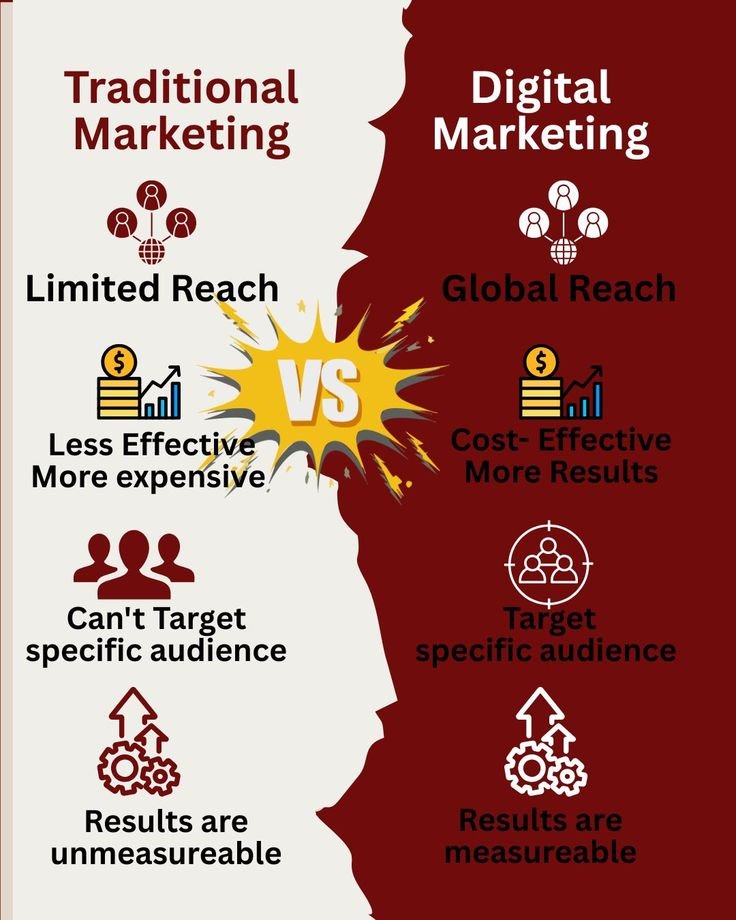
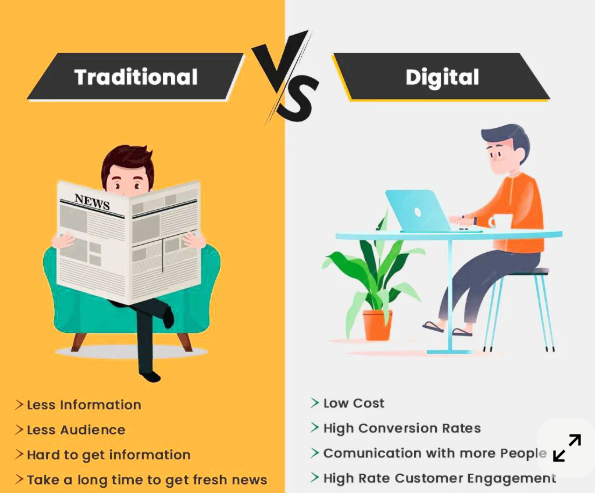
High costs
-
Limited targeting
-
Poor measurability
-
Slower feedback loops
-
Difficult scalability
In fast-moving markets, these limitations can reduce competitiveness.
The Hybrid Approach: AI + Traditional Marketing
The future of marketing is not AI vs humans, but AI with humans.
How the Hybrid Model Works
-
Humans handle strategy, creativity, and ethics
-
AI manages data, automation, and optimization
-
Humans guide brand voice and storytelling
-
AI improves efficiency and performance
Benefits of a Hybrid Strategy
-
Better customer experience
-
Stronger brand identity
-
Higher ROI
-
Faster execution
This balanced approach delivers the best results.
Who Should Use AI Marketing?
AI marketing is ideal for:
-
Large enterprises
-
Data-driven organizations
-
E-commerce and tech companies
-
Performance-focused marketers
-
Businesses aiming for rapid scaling
Who Should Rely More on Traditional Marketing?
Traditional marketing remains effective for:
-
Local businesses
-
Luxury and premium brands
-
Relationship-driven industries
-
Markets with limited digital adoption
Future of AI vs Traditional Marketing
Key Trends Shaping the Future
-
AI-driven personalization at scale
-
Voice and visual search
-
Predictive customer journeys
-
Stronger data privacy regulations
-
Human-led brand storytelling
-
Ethical AI marketing practices
Marketing will become more intelligent—but also more human-centric.
Conclusion: AI vs Traditional Marketing — Final Verdict
AI marketing is faster, smarter, more scalable, and data-driven, making it essential for modern businesses. Traditional marketing, however, excels in creativity, emotional connection, trust, and ethics.
The real competitive advantage lies in combining both.
Brands that successfully integrate:
-
AI-powered automation and analytics
with -
Human creativity, empathy, and strategic thinking
will lead the future of marketing.
AI enhances efficiency. Humans create meaning. Together, they win.