Table of Contents
ToggleBest Step-by-Step Digital Marketing Plan (Beginner to Advanced)
Digital marketing works best when it’s planned, structured, and data-driven. Random posting, boosting ads without strategy, or copying competitors rarely delivers long-term results. A step-by-step digital marketing plan helps businesses grow traffic, leads, and sales consistently.
This guide walks you through every stage of a winning digital marketing plan, from goal setting to execution, optimization, and scaling.
Step 1: Define Clear Digital Marketing Goals
Before choosing tools or platforms, define what success looks like.
Common Digital Marketing Goals
-
Increase website traffic
-
Generate qualified leads
-
Boost online sales
-
Improve brand awareness
-
Increase app downloads
-
Grow email subscribers
-
Improve customer retention
SMART Goal Framework
Your goals should be:
-
Specific – “Increase leads” → “Increase leads by 30%”
-
Measurable – Use numbers and KPIs
-
Achievable – Realistic with your budget
-
Relevant – Align with business objectives
-
Time-bound – Set deadlines
Example:
Increase organic website traffic by 40% in 6 months.
Step 2: Understand Your Target Audience
Digital marketing fails without audience clarity.
Create Buyer Personas
Define:
-
Age, gender, location
-
Income level
-
Job role or business type
-
Interests & online behavior
-
Pain points & challenges
-
Preferred platforms (Google, Instagram, LinkedIn, YouTube)
Tools for Audience Research
-
Google Analytics
-
Google Search Console
-
Facebook Audience Insights
-
Instagram Insights
-
Surveys & feedback forms
The better you know your audience, the better your messaging and conversions.
Step 3: Competitor Analysis
Your competitors are a free strategy guide if used correctly.
Analyze Competitors For:
-
Website structure & landing pages
-
Top keywords they rank for
-
Content topics & formats
-
Social media platforms they use
-
Ad creatives & messaging
-
Offers & pricing strategies
Tools for Competitor Research
-
SEMrush / Ahrefs
-
SimilarWeb
-
Meta Ad Library
-
Google search results
-
Ubersuggest
Identify gaps — what they’re missing is your opportunity.
Step 4: Choose the Right Digital Marketing Channels
Not every business needs every channel. Choose based on goals + audience.
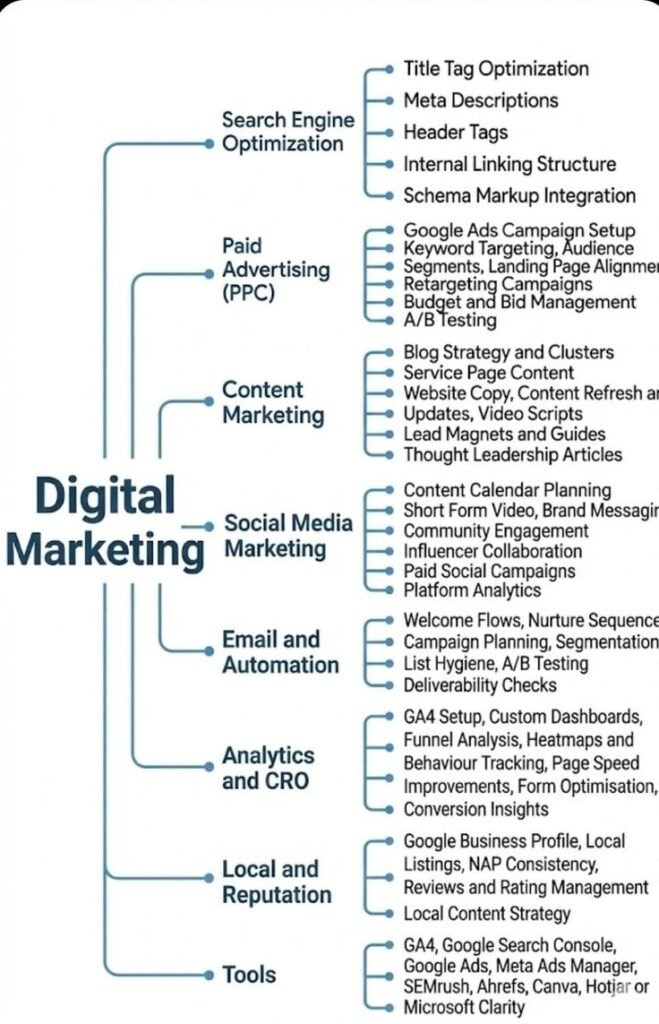
Core Digital Marketing Channels
-
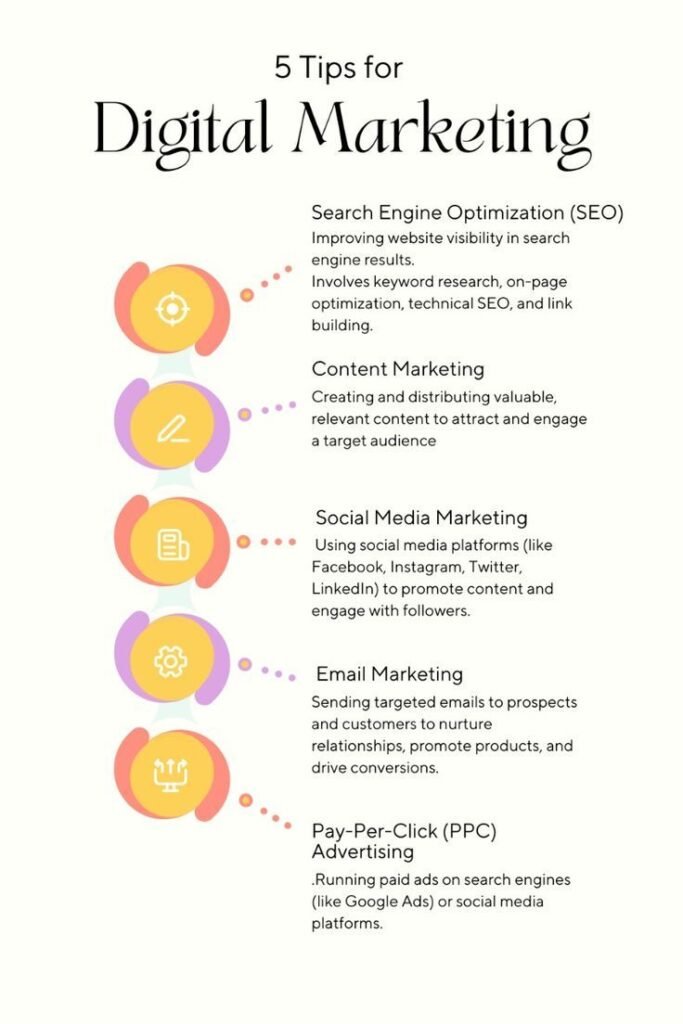
Search Engine Optimization (SEO)
-
Content Marketing
-
Social Media Marketing
-
Paid Advertising (Google Ads, Meta Ads)
-
Email Marketing
-
Influencer Marketing
-
Affiliate Marketing
-
WhatsApp & SMS Marketing
Example:
B2B → SEO, LinkedIn, Email
D2C → Instagram, Paid Ads, Influencers
Local Business → Local SEO, Google Ads, WhatsApp
Step 5: Build a High-Converting Website or Landing Pages
Your website is the foundation of digital marketing.
Website Must Have:
-
Fast loading speed
-
Mobile-friendly design
-
Clear CTA (Call to Action)
-
SEO-optimized pages
-
Trust signals (reviews, testimonials)
-
Easy navigation
Landing Page Essentials
-
Clear headline
-
One focused offer
-
Minimal distractions
-
Strong CTA button
-
Lead capture form
Without conversion-optimized pages, traffic is wasted.
Step 6: Keyword Research & SEO Planning
SEO brings free, long-term traffic.
Keyword Research Types
-
Informational keywords (how, what, why)
-
Commercial keywords (best, top, review)
-
Transactional keywords (buy, price, near me)
-
Long-tail keywords (high intent, low competition)
On-Page SEO Checklist
-
Keyword-optimized titles & meta descriptions
-
H1, H2, H3 structure
-
Internal linking
-
Image alt tags
-
SEO-friendly URLs
Off-Page SEO
-
Backlinks from high-authority sites
-
Guest blogging
-
Local citations
-
PR mentions
Step 7: Create a Content Marketing Strategy
Content builds trust, authority, and organic traffic.
Content Formats
-
Blog posts
-
Case studies
-
Videos & reels
-
Infographics
-
Ebooks & guides
-
Webinars
-
Podcasts
Content Funnel Strategy
-
Top of Funnel: Educational blogs, reels
-
Middle of Funnel: Comparisons, guides
-
Bottom of Funnel: Case studies, demos
Consistency matters more than volume.
Step 8: Social Media Marketing Plan
Social media is for visibility, engagement, and community building.
Platform-Wise Strategy
-
Instagram → Reels, carousels, stories
-
Facebook → Groups, ads, local reach
-
LinkedIn → B2B content, thought leadership
-
YouTube → Tutorials, long-form videos
-
Twitter/X → Trends, short insights
Posting Strategy
-
3–5 posts per week
-
Mix of educational + promotional content
-
Strong hooks in first 3 seconds
-
Clear CTAs
Step 9: Paid Advertising Strategy
Paid ads give instant visibility and scalability.
Popular Ad Platforms
-
Google Search Ads
-
Google Display & YouTube Ads
-
Facebook & Instagram Ads
-
LinkedIn Ads
Ad Funnel Setup
-
Awareness ads
-
Consideration ads
-
Retargeting ads
-
Conversion ads
Track ROAS, CPC, CPA, and conversion rates closely.
Step 10: Email & Marketing Automation
Email marketing delivers high ROI.
Email Campaign Types
-
Welcome emails
-
Promotional campaigns
-
Abandoned cart emails
-
Newsletter updates
-
Upsell & cross-sell emails
Automation Tools
-
Mailchimp
-
HubSpot
-
ActiveCampaign
-
Klaviyo
Automation saves time and improves conversions.
Step 11: Tracking, Analytics & KPIs
What you don’t track, you can’t improve.
Key Metrics to Track
-
Website traffic
-
Conversion rate
-
Cost per lead
-
Customer acquisition cost
-
ROAS
-
Email open & click rates
-
Engagement metrics
Essential Tools
-
Google Analytics 4
-
Google Tag Manager
-
Search Console
-
Meta Pixel
-
Conversion APIs
Step 12: Optimization & A/B Testing
Digital marketing is never set and forget.
Optimize:
-
Ad creatives
-
Landing page headlines
-
CTAs
-
Email subject lines
-
Posting times
Small improvements compound into big growth.
Step 13: Scale What Works
Once you find winning strategies:
-
Increase ad budgets
-
Repurpose high-performing content
-
Expand into new platforms
-
Build influencer collaborations
-
Invest in advanced automation & AI tools
Scaling without testing leads to losses. Scale only proven campaigns.
Final Thoughts
A step-by-step digital marketing plan provides clarity, consistency, and growth. Businesses that follow structured strategies outperform those relying on random tactics.