Table of Contents
ToggleThe Best Growth Loops Marketing Strategy: Build Compounding, Self-Sustaining Growth (3000 Words)
In today’s hyper-competitive digital landscape, traditional marketing funnels are no longer enough to create sustainable growth. Paid ads are expensive. Organic reach is unpredictable. Customer acquisition costs are rising across industries.
The companies winning today aren’t relying on one-off campaigns.
They are building growth loops.
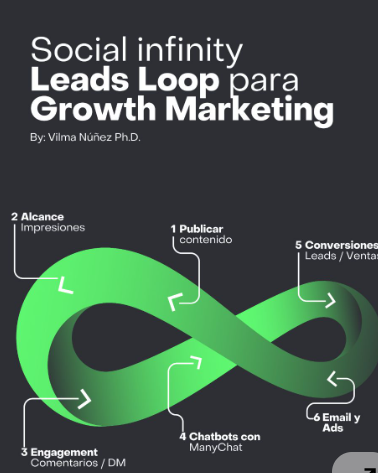
Growth loops are self-reinforcing systems where each action generates momentum for the next cycle of growth. Instead of linear progression, they create compounding results.
In this in-depth guide, you’ll learn:
-
What growth loops marketing really means
-
Why funnels are no longer enough
-
Types of growth loops
-
Real-world examples
-
A step-by-step framework to build your own
-
Metrics to measure success
-
Advanced strategies
-
Common mistakes to avoid
Let’s dive in.
What Is Growth Loops Marketing?
Growth loops marketing is a strategy that focuses on designing systems where outputs automatically generate new inputs, creating continuous and compounding growth.
Unlike traditional funnels, which end after conversion, growth loops continue indefinitely.
Traditional Funnel (Linear Model)
Traffic → Leads → Customers → Revenue
Once a customer converts, the funnel essentially stops.
Growth Loop (Circular Model)
User → Action → Output → New Users → More Actions → More Output
Each user action fuels the next wave of growth.
The more cycles completed, the stronger the growth engine becomes.
Why Funnels Alone Are No Longer Enough
Funnels treat growth as a one-time event. You pay for traffic, convert customers, and repeat the process.
This leads to:
-
Rising acquisition costs
-
Dependency on paid media
-
Unpredictable scaling
-
No built-in compounding
Growth loops shift the focus from campaigns to systems.
Companies like Dropbox, Airbnb, and LinkedIn scaled massively because their products created self-reinforcing growth cycles.
The Core Components of a Growth Loop
Every successful growth loop includes three key elements:
1. Input
The trigger that starts the cycle (a new user, content upload, purchase, etc.).
2. Action
The behavior that creates value (sharing, inviting, posting, reviewing).
3. Output
The result that attracts new users or generates reinvestable value.
If the output consistently brings new inputs, you have a functioning growth loop.
The Most Effective Types of Growth Loops
Let’s break down the most powerful growth loop models.
1. Viral Growth Loops
Users invite others into the system.
Example:
Dropbox offered free storage space for referrals.
User signs up → Invites friends → Friends sign up → More invitations.
If each user brings more than one additional user, growth becomes exponential.
2. Content Growth Loops
Users generate content that attracts more users.
Example:
YouTube
Creators upload videos → Viewers consume → Ads fund creators → More creators upload → More viewers join.
Content fuels visibility, which fuels more content.
3. Marketplace Growth Loops
Supply attracts demand. Demand attracts supply.
Example:
Airbnb
Hosts list homes → Guests book → Revenue motivates more hosts → More listings attract more guests.
Each side strengthens the other.
4. Paid Reinforcement Loops
Revenue from customers funds paid acquisition.
User subscribes → Revenue generated → Reinvest into ads → Acquire more users → Generate more revenue.
This loop works when Lifetime Value (LTV) exceeds Customer Acquisition Cost (CAC).
5. Engagement Growth Loops
User engagement increases retention and referrals.
Example:
Spotify
Listening behavior → Personalized playlists → Higher engagement → More sharing → New users join.
Engagement becomes a growth driver.
Why Growth Loops Create Compounding Growth
Growth loops compound for three reasons:
-
Each cycle strengthens the system
-
Acquisition cost decreases over time
-
Retention multiplies impact
Unlike linear marketing efforts, loops improve as they scale.
The longer they run, the stronger they become.
Step-by-Step Framework to Build a Growth Loop
Here’s a practical blueprint you can follow.
Step 1: Identify Your Core Value Moment
What is the main action that delivers value?
Examples:
-
Completing a task
-
Booking a stay
-
Uploading content
-
Making a purchase
Your growth loop must revolve around this moment.
Step 2: Design an Action That Creates Exposure
Ask yourself:
-
Does this action generate shareable content?
-
Does it create invitations?
-
Does it produce revenue?
-
Does it create visibility?
Growth happens when value creates visibility.
Step 3: Make the Output Public or Shareable
Private actions don’t generate loops.
For example:
LinkedIn
Profile updates are visible to connections, driving engagement and sign-ups.
Step 4: Reduce Friction
Simplify:
-
Signup flows
-
Sharing processes
-
Referral steps
-
Onboarding
One-click sharing often makes the difference.
Step 5: Track Loop Velocity
Measure:
-
How fast users reach value
-
Time between signup and first referral
-
Viral coefficient
-
Retention rates
Faster loops scale quicker.
Essential Growth Loop Metrics
To optimize effectively, track:
Viral Coefficient
How many new users each user generates.
Cycle Time
How long one loop takes to complete.
Activation Rate
How many users reach the value moment.
Retention Rate
Higher retention strengthens every loop.
LTV:CAC Ratio
For paid loops, ensure profitability.
Real-World Growth Loop Examples
Dropbox
Referral incentives reduced paid acquisition and accelerated organic growth.
Users post photos → Followers engage → Engagement increases visibility → New users join to participate.
Uber
More drivers → Shorter wait times → More riders → Higher earnings → More drivers.
Dual-sided loop.
Amazon
More sellers → Wider selection → More customers → More sales → More sellers.
Marketplace + revenue reinvestment loop.
How to Combine Funnels and Growth Loops
Funnels still matter.
Best practice:
-
Use funnels to generate initial traction
-
Convert users quickly
-
Feed them into growth loops
-
Strengthen retention
Funnels start the engine.
Loops keep it running.
Advanced Growth Loop Strategies
1. Layer Multiple Loops
Stack:
-
Referral loop
-
Content loop
-
Paid reinvestment loop
-
Engagement loop
Multiple loops create exponential acceleration.
2. Strengthen Retention First
Retention amplifies output.
If users stay longer:
-
They refer more
-
They spend more
-
They create more content
Retention multiplies growth.
3. Community-Led Growth Loops
Communities drive:
Engagement → Loyalty → Advocacy → Referrals → Growth
Platforms like Reddit thrive on this.
4. Product-Led Growth Integration
Design the product itself to create growth triggers.
Built-in:
-
Sharing features
-
Referral dashboards
-
Collaborative workflows
The best loops are embedded into the product experience.
Common Growth Loop Mistakes to Avoid
Avoid these pitfalls:
❌ Designing loops without product-market fit
❌ Overcomplicating referral systems
❌ Ignoring onboarding
❌ Focusing only on acquisition
❌ Not measuring cycle speed
❌ Relying entirely on paid ads
Loops must feel natural, not forced.
Growth Loops vs Growth Hacks
Growth hacks are short-term spikes.
Growth loops are long-term systems.
Hack = temporary increase
Loop = compounding expansion
Sustainable companies prioritize loops.
How Startups Can Implement Growth Loops Quickly
If you’re early-stage:
-
Focus on one simple loop
-
Add referral incentive
-
Make sharing effortless
-
Measure weekly
-
Optimize activation speed
Small loops today become powerful engines tomorrow.
The Future of Growth Loops Marketing
Growth marketing is shifting toward:
-
AI-driven personalization loops
-
Community-powered acquisition
-
Creator-led content loops
-
Predictive churn prevention
-
Automated reinvestment systems
Growth will increasingly be system-driven rather than campaign-driven.
Final Thoughts: Build Systems, Not Campaigns
Growth loops marketing changes the way you think about growth.
Instead of asking:
“How do we get more traffic?”
Ask:
“How can each user generate the next user?”
Design your product and marketing around compounding cycles.
Embed sharing, visibility, engagement, and reinvestment into the core experience.
The companies that dominate markets don’t run better campaigns.
They build better systems.