Table of Contents
ToggleThe Ultimate Cart Abandonment Strategy: How to Recover Lost Sales and Increase Revenue (3000 Words)
Cart abandonment is one of the biggest revenue leaks in ecommerce.
Shoppers browse, add products to their cart, reach checkout—and disappear. For most online stores, 60–80% of carts are abandoned. That’s not a traffic problem. That’s a conversion and experience problem.
The good news? Cart abandonment is fixable.
This guide breaks down the best cart abandonment strategies used by top-performing ecommerce brands to recover lost sales, improve checkout experiences, and increase customer lifetime value.
If you implement even half of these tactics, you’ll unlock revenue you’re already paying for.
Table of Contents
-
What Is Cart Abandonment?
-
Why Cart Abandonment Happens
-
The True Cost of Cart Abandonment
-
The Psychology Behind Abandoned Carts
-
Core Pillars of a Cart Abandonment Strategy
-
Checkout Optimization to Prevent Abandonment
-
Email Cart Abandonment Strategy
-
SMS Cart Abandonment Strategy
-
Retargeting Ads for Abandoned Carts
-
On-Site Recovery Tactics
-
Payment, Shipping & Trust Optimization
-
Mobile Cart Abandonment Strategy
-
Personalization & Segmentation
-
Tools & Technology for Cart Recovery
-
KPIs to Track Cart Abandonment Success
-
Common Cart Abandonment Mistakes
-
Future Trends in Cart Recovery
-
Final Thoughts
1. What Is Cart Abandonment?
Cart abandonment occurs when a shopper adds products to their online cart but leaves the website before completing the purchase.
It typically happens at:
-
Cart page
-
Checkout page
-
Payment stage
Cart abandonment is not rejection—it’s hesitation.
2. Why Cart Abandonment Happens
Understanding why users abandon carts is the foundation of any recovery strategy.
Top Reasons for Cart Abandonment
-
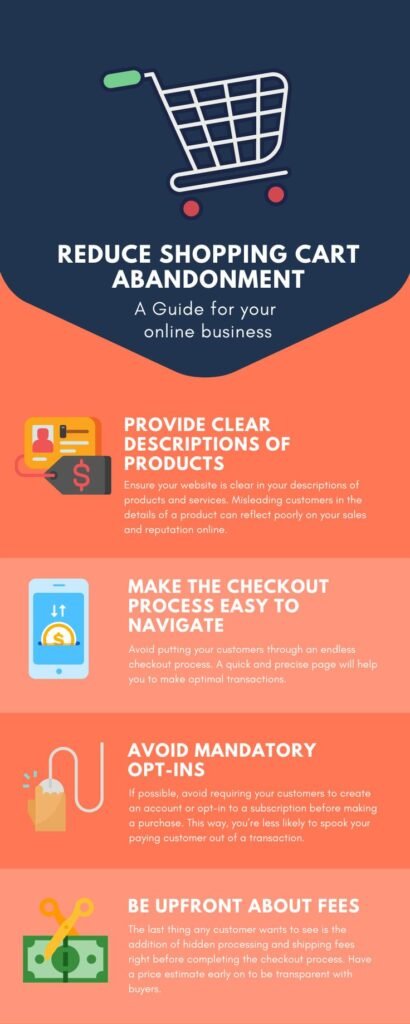
Unexpected shipping costs
-
Forced account creation
-
Complicated checkout process
-
Lack of payment options
-
Security or trust concerns
-
Slow page speed
-
Mobile usability issues
-
Just browsing or price comparison
Most of these are experience problems, not demand problems.
3. The True Cost of Cart Abandonment
Cart abandonment isn’t just lost revenue—it’s wasted marketing spend.
Every abandoned cart represents:
-
Paid ad cost
-
SEO effort
-
Influencer spend
-
Content marketing investment
Recovering even 10–20% of abandoned carts can significantly increase revenue without increasing traffic.
4. The Psychology Behind Abandoned Carts
Cart abandonment is driven by buyer psychology.
Key Psychological Triggers
-
Sticker shock – Unexpected fees create friction
-
Loss of control – No guest checkout
-
Fear – Security and trust concerns
-
Decision fatigue – Too many steps
-
Delay bias – “I’ll come back later”
Effective cart abandonment strategies reduce friction and rebuild confidence.
5. Core Pillars of a Cart Abandonment Strategy
Every high-performing recovery system is built on four pillars:
-
Prevention – Reduce abandonment upfront
-
Recovery – Bring users back
-
Personalization – Contextual messaging
-
Optimization – Continuous testing
6. Checkout Optimization to Prevent Abandonment
The best cart abandonment strategy starts before abandonment happens.
A. Simplify the Checkout Flow
Best practices:
-
One-page or minimal-step checkout
-
Guest checkout option
-
Autofill for address and payment
-
Progress indicators
Platforms like Shopify excel because of streamlined checkout experiences.
B. Transparent Pricing
Display:
-
Shipping costs early
-
Taxes upfront
-
Final price before checkout
Hidden fees are the #1 abandonment trigger.
C. Page Speed Optimization
Slow checkout = lost sales.
Optimize:
-
Image compression
-
Script loading
-
Mobile performance
Every second of delay hurts conversions.
7. Email Cart Abandonment Strategy
Email is the most powerful cart recovery channel.
A. Cart Abandonment Email Sequence
The highest-performing brands use 3–5 emails:
Email 1: Reminder (1–2 hours)
Gentle nudge with product image.
Email 2: Value Reinforcement (12–24 hours)
Benefits, reviews, social proof.
Email 3: Objection Handling (24–48 hours)
Shipping info, returns, FAQs.
Email 4: Incentive (48–72 hours)
Discount or free shipping (optional).
B. Best Practices for Abandoned Cart Emails
-
Clear CTA
-
Product images
-
Mobile-first design
-
Personalization (name, product, price)
-
Urgency without pressure
Tools like Klaviyo and Mailchimp automate this at scale.
8. SMS Cart Abandonment Strategy
SMS delivers immediacy and high open rates.
When SMS Works Best
-
High-intent carts
-
Returning customers
-
Limited-time offers
-
Mobile-first audiences
SMS Best Practices
-
Send within 30–60 minutes
-
Keep messages short
-
Include direct checkout link
-
Use opt-in compliance
-
Avoid overuse
Example:
“You left something behind 👀 Complete your order before it sells out.”
9. Retargeting Ads for Abandoned Carts
Paid retargeting keeps your brand top-of-mind.
A. Dynamic Product Ads
Platforms like Facebook and Instagram allow dynamic ads that show the exact product abandoned.
B. Google Remarketing
Google retargeting captures users across:
-
Display Network
-
YouTube
-
Search
Best used with urgency-based messaging.
10. On-Site Cart Recovery Tactics
Prevent abandonment while users are still on-site.
A. Exit-Intent Popups
Trigger when users attempt to leave.
Offer:
-
Free shipping
-
Small discount
B. Persistent Cart Saving
Save carts automatically so users can return later—especially on mobile.
C. Live Chat & Chatbots
Answer objections in real time:
-
Shipping questions
-
Sizing issues
-
Payment concerns
11. Payment, Shipping & Trust Optimization
Trust is critical at checkout.
A. Payment Options
Offer multiple methods:
-
Credit/debit cards
-
UPI & wallets
-
Buy Now, Pay Later
-
PayPal
Fewer payment options = higher abandonment.
B. Shipping Strategy
-
Free shipping thresholds
-
Clear delivery timelines
-
Easy returns
Free shipping often outperforms discounts.
C. Trust Signals
Add:
-
SSL badges
-
Money-back guarantees
-
Reviews and testimonials
-
Secure checkout icons
12. Mobile Cart Abandonment Strategy
Mobile abandonment is higher than desktop.
Mobile Optimization Checklist
-
Large CTA buttons
-
Sticky checkout buttons
-
Autofill enabled
-
Simplified forms
-
Mobile wallets
If mobile checkout isn’t frictionless, users leave.
13. Personalization & Segmentation
Not all abandoned carts are equal.
Segment by:
-
Cart value
-
New vs returning users
-
Product category
-
Geography
-
Device type
High-value carts may justify incentives. Low-value carts may not.
14. Tools & Technology for Cart Recovery
Best-in-class cart recovery stacks include:
-
Shopify – checkout & integrations
-
Klaviyo – email & SMS automation
-
Google Analytics – funnel analysis
-
Meta Ads – retargeting
-
Hotjar – heatmaps & session recordings
The right tools amplify strategy—but strategy comes first.
15. KPIs to Track Cart Abandonment Performance
Track these metrics regularly:
-
Cart abandonment rate
-
Checkout abandonment rate
-
Recovery rate
-
Email open & click rates
-
SMS conversion rate
-
Revenue recovered
-
Time to conversion
Optimization is impossible without data.
16. Common Cart Abandonment Mistakes
Avoid these costly errors:
❌ Over-discounting
❌ Too many recovery messages
❌ Ignoring mobile users
❌ Not testing checkout flow
❌ Treating all carts the same
❌ No post-purchase analysis
Recovery should feel helpful, not desperate.
17. Future Trends in Cart Abandonment Strategy
The future of cart recovery is smarter and more personalized.
Key Trends
-
AI-driven predictive abandonment
-
Real-time checkout personalization
-
Server-side tracking
-
Zero-party data usage
-
Conversational commerce
-
One-click checkout experiences
Brands that adapt early win conversion battles.
18. Final Thoughts: Cart Abandonment Is an Opportunity
Cart abandonment isn’t failure—it’s feedback.
It tells you:
-
Where users hesitate
-
What causes friction
-
How to improve experience
The best brands don’t just recover carts—they design systems that prevent abandonment in the first place.
When you combine:
-
Frictionless checkout
-
Smart email & SMS recovery
-
Personalized retargeting
You turn lost sales into predictable revenue.