Table of Contents
ToggleThe Ultimate Guide to Hashtag Strategies: How to Maximize Reach, Engagement & Growth in 2026
Hashtags are no longer just symbols added at the end of a caption. They are powerful discovery tools that determine how your content is categorized, distributed, and amplified across social platforms. When used strategically, hashtags can dramatically increase visibility, improve engagement, attract the right audience, and even drive conversions.
From Instagram and LinkedIn to X and TikTok, every platform uses hashtags differently. Understanding those nuances is the key to building a high-performing hashtag strategy.
This comprehensive 3000-word guide will walk you through everything you need to know — from hashtag research and categorization to platform-specific tactics and performance tracking.
1. What Are Hashtags and Why They Matter
A hashtag is a keyword or phrase preceded by the “#” symbol. It transforms ordinary text into a searchable and clickable topic label.
For example:
-
#DigitalMarketing
-
#StartupIndia
-
#ContentStrategy
When users click or search a hashtag, they see all public posts that include it. This makes hashtags powerful for:
-
Discoverability
-
Community building
-
Content categorization
-
Trend participation
-
Campaign tracking
In algorithm-driven platforms, hashtags act as metadata signals that help platforms understand what your content is about.
2. How Hashtags Influence Social Media Algorithms
Each platform’s algorithm evaluates:
-
Relevance
-
Engagement signals
-
Content quality
-
User interest behavior
-
Hashtag context
Hashtags help algorithms categorize your content correctly. For example:
On Instagram:
-
Hashtags help content appear in Explore pages and hashtag feeds.
On TikTok:
-
Hashtags contribute to For You Page categorization.
On LinkedIn:
-
Hashtags help distribute posts to topic-based communities.
On YouTube:
-
Hashtags improve search visibility and categorization (though keywords in titles matter more).
On X:
-
Hashtags increase real-time discoverability during trends and live conversations.
3. Types of Hashtags You Must Use
A winning hashtag strategy balances different categories.
1. Broad Hashtags
High search volume, high competition.
Example:
-
#Marketing
-
#Fitness
-
#Entrepreneur
Best for visibility but difficult to rank.
2. Niche Hashtags
Specific and targeted.
Example:
-
#EmailMarketingTips
-
#VeganFitnessCoach
-
#B2BSaaSMarketing
Lower competition, higher engagement rate.
3. Branded Hashtags
Unique to your business or campaign.
Example:
-
#NikeRunClub (used by Nike)
-
#ShareACoke (used by Coca-Cola)
Great for:
-
Community building
-
Campaign tracking
-
User-generated content
4. Community Hashtags
Created by users within a niche.
Example:
-
#WomenInTech
-
#StartupIndia
-
#CreatorsOfInstagram
They connect you with active communities.
5. Location-Based Hashtags
Ideal for local businesses.
Example:
-
#DelhiStartups
-
#MumbaiFoodies
-
#BangaloreEntrepreneurs
Especially powerful if you’re targeting Indian markets.
6. Trending Hashtags
Temporary and event-driven.
Example:
-
#WorldEnvironmentDay
-
#IPL2026
These create short-term traffic spikes.
4. Platform-Specific Hashtag Strategies
Hashtag Strategy for Instagram
On Instagram:
-
Use 5–15 relevant hashtags
-
Mix broad + niche + branded
-
Avoid banned hashtags
-
Place in caption (better than comments in 2026)
Best approach:
-
3 broad hashtags
-
5 niche hashtags
-
3 community hashtags
-
1 branded hashtag
Hashtag Strategy for TikTok
On TikTok:
-
Use 3–6 highly relevant hashtags
-
Focus on search intent
-
Combine trending + niche
Example:
#SmallBusinessTips
#MarketingHacks
#ForYou
Hashtag Strategy for LinkedIn
On LinkedIn:
-
Use 3–5 hashtags
-
Place at the end of the post
-
Focus on industry relevance
Example:
#DigitalMarketing
#PersonalBranding
#StartupGrowth
Hashtag Strategy for X (Twitter)
On X:
-
Use 1–2 hashtags
-
Focus on trending topics
-
Use during live events
Too many hashtags reduce readability.
Hashtag Strategy for YouTube
On YouTube:
-
Use 3 hashtags in description
-
Prioritize keywords in title
-
Use searchable phrases
5. How to Research the Best Hashtags
1. Platform Search Bar
Type a keyword and analyze:
-
Suggested hashtags
-
Post volume
-
Related tags
2. Competitor Analysis
Study top creators in your niche:
-
What hashtags do they repeat?
-
Which posts perform best?
3. Hashtag Tools
Use tools like:
-
Instagram insights
-
LinkedIn analytics
-
TikTok Creative Center
4. Google Trends
Analyze seasonal trends and keywords.
5. Analyze Engagement, Not Just Volume
A hashtag with:
-
10M posts = high competition
-
50K posts = sweet spot
Balance reach + ranking probability.
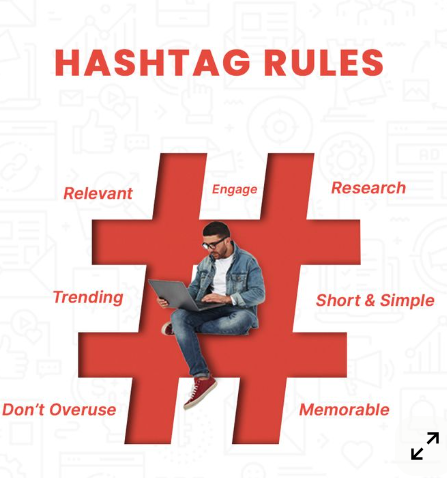
6. The 30-Hashtag Myth (Debunked)
Many believe using 30 hashtags boosts reach.
Reality:
-
Relevance matters more than quantity
-
Too many hashtags can signal spam
-
Engagement rate drops with irrelevant tags
Quality > Quantity.
7. Creating a Hashtag Bank Strategy
Build your own categorized list:
| Category | Hashtag | Usage Frequency |
|---|---|---|
| Broad | #Marketing | Weekly |
| Niche | #EmailMarketingTips | Daily |
| Branded | #YourBrandName | Every post |
| Community | #WomenEntrepreneurs | Weekly |
Update monthly.
8. Advanced Hashtag Strategies
1. Hashtag Clustering
Group related hashtags together.
Example:
-
#ContentMarketing
-
#ContentStrategy
-
#ContentCreation
Helps algorithm understand topic depth.
2. Rotating Hashtag Sets
Avoid using the same 10 hashtags repeatedly.
Create:
-
Set A
-
Set B
-
Set C
Rotate to avoid shadow limitations.
3. Data-Driven Optimization
Track:
-
Reach from hashtags
-
Saves
-
Profile visits
-
Engagement rate
Double down on high performers.
4. Campaign-Specific Hashtags
When launching products:
Create:
#LaunchWithAnurag
#AnuragGrowthMasterclass
Encourage audience participation.
9. Common Hashtag Mistakes to Avoid
❌ Using irrelevant trending hashtags
❌ Copy-pasting competitor tags blindly
❌ Overusing banned hashtags
❌ Using extremely broad tags only
❌ Ignoring analytics
10. Hashtags & SEO: The New Discovery Engine
Social platforms are becoming search engines.
Users now search:
-
“Best digital marketing tips”
-
“How to grow startup”
Strategic hashtags increase search discoverability.
11. Hashtag Strategy for Personal Branding
If you’re building a personal brand:
Use:
-
Your name hashtag (#AnuragKumarMarketing)
-
Industry hashtag (#DigitalMarketingIndia)
-
Value-driven hashtag (#MarketingInsights)
Consistency builds recognition.
12. Viral Hashtag Formula
To increase viral potential:
Trend + Emotion + Community
Example:
#StartupStruggles
#MondayMotivation
#IndianEntrepreneurs
Combine relatability with relevance.
13. Measuring Hashtag Performance
Key Metrics:
-
Reach from hashtags
-
Engagement rate
-
Follower growth
-
Saves and shares
-
Click-through rate
Test for 30 days.
Eliminate low performers.
14. Hashtag Strategy for 2026 and Beyond
Emerging trends:
-
AI-powered content categorization
-
Search-first social platforms
-
Micro-community hashtags
-
Geo-personalized hashtag discovery
-
Voice search integration
Hashtags are evolving into semantic search signals.
15. The Perfect Hashtag Formula (Step-by-Step)
Step 1: Identify your content topic
Step 2: Research 20 related hashtags
Step 3: Filter by relevance + competition
Step 4: Create 3 rotating sets
Step 5: Track performance
Step 6: Optimize monthly
Repeat.
Conclusion
Hashtags are not magic. They are strategy.
The best hashtag strategy includes:
-
Research
-
Relevance
-
Rotation
-
Data tracking
-
Platform-specific adaptation
If used correctly, hashtags can:
-
Increase reach
-
Improve engagement
-
Attract ideal audience
-
Strengthen branding
Mastering hashtag strategy is no longer optional — it’s essential for digital success in 2026.