Table of Contents
ToggleBest 360 Degree Marketing Approach: The Complete 3000-Word Guide to Integrated Brand Growth
In today’s hyper-connected world, customers don’t interact with brands on just one platform. They discover products on social media, read reviews on Google, watch YouTube videos, compare prices on marketplaces, and check emails before purchasing.
That’s why businesses need a 360 degree marketing approach — a strategy that surrounds customers with consistent messaging across all online and offline touchpoints.
This guide explains the best 360 degree marketing approach, how to implement it step-by-step, and how to build a fully integrated marketing system that drives awareness, engagement, conversions, and long-term loyalty.
What Is 360 Degree Marketing?
A 360 degree marketing approach is a strategy that integrates:
-
Digital marketing
-
Offline marketing
-
Branding
-
Customer experience
-
Sales alignment
-
Post-purchase engagement
The goal is to create consistent brand communication across every channel your customer interacts with.
Instead of isolated campaigns, you build a unified marketing ecosystem.
Why 360 Degree Marketing Is Powerful
Consumers today interact with brands across:
-
Social media
-
Search engines
-
Websites
-
Emails
-
Marketplaces
-
Physical stores
-
Events
-
Word-of-mouth
If your messaging is inconsistent, trust breaks.
If your messaging is aligned, trust multiplies.
Benefits of a 360 Degree Marketing Strategy
-
Stronger brand recall
-
Higher conversion rates
-
Better customer retention
-
Improved ROI
-
Strong competitive advantage
Brands like Apple and Nike are masters of consistent, multi-channel messaging. Every ad, store, website, and social post feels aligned.
Core Pillars of a 360 Degree Marketing Approach
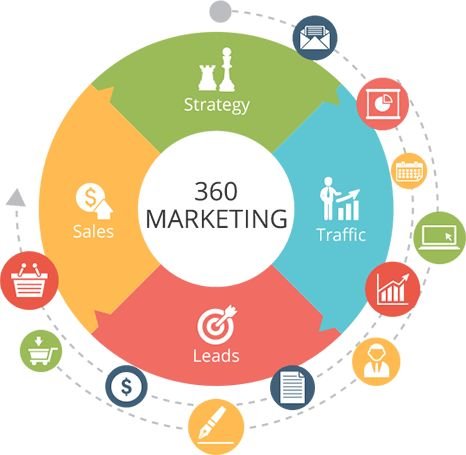
To build a powerful 360 marketing system, you need five pillars:
-
Brand Strategy
-
Audience Targeting
-
Multi-Channel Execution
-
Data Integration
-
Continuous Optimization
Let’s explore each in depth.
1. Brand Strategy: The Foundation
Before marketing everywhere, clarify:
-
Your brand positioning
-
Your unique value proposition
-
Your tone of voice
-
Your visual identity
-
Your brand story
Without a strong foundation, your marketing becomes noise.
Define:
-
Who you serve
-
What problem you solve
-
Why you are different
-
What emotion you trigger
Every channel must reflect the same identity.
2. Deep Audience Research
A 360 degree strategy begins with customer understanding.
Analyze:
-
Demographics
-
Psychographics
-
Buying behavior
-
Pain points
-
Online behavior patterns
Use tools like:
-
Website analytics
-
Customer surveys
-
Social listening
-
CRM data
When you understand your audience deeply, your messaging resonates across platforms.
3. Multi-Channel Marketing Integration
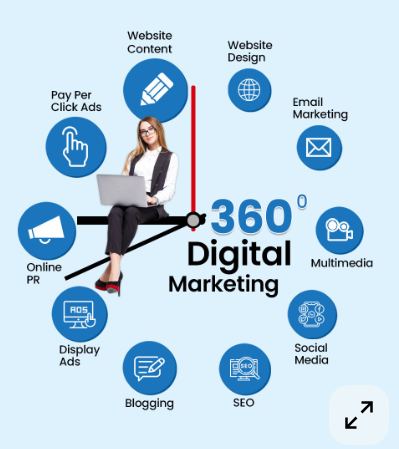
A true 360 strategy combines online and offline channels.
A. Digital Channels
1. Search Engine Optimization (SEO)
Optimize your website for search engines to capture organic traffic.
2. Pay-Per-Click Advertising (PPC)
Run ads on platforms like Google and Meta Platforms.
3. Social Media Marketing
Leverage:
-
Instagram
-
Facebook
-
LinkedIn
-
YouTube
Maintain consistent visuals and tone.
4. Email Marketing
Nurture leads and maintain customer relationships through automation.
5. Content Marketing
Blogs, videos, podcasts, and infographics establish authority.
6. Influencer Marketing
Partner with creators who align with your brand.
B. Offline Channels
Even digital-first brands benefit from offline touchpoints:
-
Events
-
Trade shows
-
Print ads
-
Billboards
-
Packaging
-
Direct mail
Offline builds credibility and brand awareness.
4. Consistent Messaging Across Channels
Consistency is the heart of 360 marketing.
Your:
-
Logo
-
Colors
-
Typography
-
Messaging style
-
Brand promise
Must remain consistent everywhere.
When a customer sees your Instagram ad and later visits your website, the experience should feel seamless.
5. Omnichannel Customer Journey Mapping
Map every stage of your customer journey:
-
Awareness
-
Consideration
-
Conversion
-
Retention
-
Advocacy
At each stage, define:
-
Which channel is used
-
What message is delivered
-
What action is expected
This ensures no gaps in communication.
6. Integrated Marketing Campaign Example
Let’s imagine launching a new product.
Step 1: Teaser Phase
-
Social media countdown
-
Email announcement
-
Influencer previews
Step 2: Launch Phase
-
PPC ads
-
SEO landing page
-
YouTube video
-
PR coverage
Step 3: Post-Launch
-
Retargeting ads
-
Testimonials
-
User-generated content
-
Email follow-ups
All messaging aligned with one central theme.
7. Data Integration & Analytics
Data connects your 360 strategy.
Track:
-
Traffic sources
-
Engagement rates
-
Conversion rates
-
Customer acquisition cost
-
Lifetime value
Use centralized dashboards to measure performance across all channels.
Integration allows smarter decisions.
8. Personalization at Scale
Customers expect personalized experiences.
Use:
-
Dynamic email content
-
Retargeting ads
-
Behavior-based recommendations
-
CRM segmentation
Personalization increases engagement and loyalty.
9. Marketing Automation
Automation ensures scalability.
Automate:
-
Lead nurturing
-
Follow-up emails
-
Abandoned cart reminders
-
Customer onboarding
-
Feedback requests
Automation maintains consistency across large audiences.
10. Sales and Marketing Alignment
In a 360 approach, marketing and sales must work together.
Ensure:
-
Shared KPIs
-
Unified CRM
-
Consistent messaging
-
Smooth handoff process
Alignment increases conversion rates.
11. Content Repurposing Strategy
Maximize content value:
-
Turn blog posts into social posts
-
Convert webinars into YouTube videos
-
Extract quotes for Instagram
-
Create email summaries
One piece of content fuels multiple channels.
12. Retargeting and Remarketing
Most customers don’t buy on first interaction.
Use retargeting ads to:
-
Remind visitors
-
Offer discounts
-
Show testimonials
-
Highlight benefits
Retargeting increases ROI significantly.
13. Brand Experience Management
360 marketing includes experience beyond marketing.
Improve:
-
Website speed
-
Customer support
-
Delivery process
-
Packaging design
-
After-sales service
Customer experience strengthens brand loyalty.
14. Reputation and Review Management
Online reviews influence buying decisions.
Encourage reviews on:
-
Google
-
Social media
-
Marketplaces
Respond to feedback professionally and promptly.
15. Community Building
Build brand communities through:
-
Facebook groups
-
Discord servers
-
Webinars
-
Events
Community turns customers into brand advocates.
16. Influencer & Partnership Integration
Strategic partnerships expand reach.
Collaborate with:
-
Industry influencers
-
Complementary brands
Partnerships amplify your message across audiences.
17. Budget Allocation Strategy
Allocate budget based on:
-
Channel performance
-
Customer acquisition cost
-
Lifetime value
-
Strategic priorities
Reallocate funds toward high-performing channels.
18. Continuous Optimization
A 360 degree marketing approach is never static.
Regularly:
-
Test creatives
-
Improve landing pages
-
Refine targeting
-
Update content
-
Optimize funnels
Small improvements compound over time.
Common Mistakes to Avoid
-
Inconsistent branding
-
Ignoring offline channels
-
Lack of data integration
-
Overusing too many platforms
-
No clear customer journey
-
Poor budget tracking
-
No performance testing
Avoid these to ensure success.
Step-by-Step Implementation Plan
Month 1: Foundation
-
Define brand strategy
-
Research audience
-
Map customer journey
Month 2: Channel Setup
-
Optimize website
-
Launch SEO strategy
-
Set up social profiles
-
Implement email system
Month 3: Campaign Launch
-
Run integrated campaign
-
Track performance
-
Collect feedback
Month 4+: Optimization
-
Improve high-performing channels
-
Scale ads
-
Introduce partnerships
Consistency over time delivers results.
Final Thoughts
The best 360 degree marketing approach is not about being everywhere randomly.
It is about:
-
Strategic integration
-
Consistent messaging
-
Data-driven decisions
-
Customer-centric execution
When every touchpoint works together, your brand becomes unforgettable.
Build the foundation.
Align the channels.
Measure the data.
Optimize continuously.
That’s how you create powerful, scalable marketing success in today’s competitive landscape.