Table of Contents
ToggleBest SEO Ranking Factors: The Complete Guide to Improve Search Engine Rankings (3000 Words)
Search engine optimization (SEO) is one of the most important strategies for increasing website visibility, organic traffic, and online business growth. When people search for information, products, or services online, search engines display the most relevant websites based on several ranking factors. Understanding these ranking factors helps businesses optimize their websites and improve their position in search engine results pages (SERPs).
Among search engines, Google dominates the global search market and uses hundreds of ranking signals in its algorithm to determine which pages should appear at the top of search results. SEO ranking factors include elements like high-quality content, backlinks, page speed, mobile optimization, user experience, and technical SEO.
This comprehensive guide explains the best SEO ranking factors, how they work, and how you can use them to improve your website’s ranking.
What Are SEO Ranking Factors?
SEO ranking factors are the criteria search engines use to evaluate and rank webpages in search results. These factors help search engines determine which content is most relevant, trustworthy, and valuable for users.
Search engines use complex algorithms to analyze websites and decide how they should appear in search results. For example, Google Search evaluates factors like keyword relevance, website authority, page speed, and user engagement before ranking pages.
If a website follows SEO best practices and aligns with these ranking factors, it has a better chance of appearing on the first page of search results.
Why SEO Ranking Factors Matter
SEO ranking factors are essential because they directly influence website visibility and organic traffic.
1. Higher Search Engine Rankings
Websites optimized for SEO ranking factors are more likely to appear on the first page of search results.
2. Increased Organic Traffic
Better rankings lead to more clicks and visitors.
3. Improved User Experience
Many ranking factors focus on website usability and performance.
4. Greater Brand Authority
High rankings build trust and credibility among users.
5. Long-Term Marketing Success
Unlike paid advertising, SEO provides long-term results.
Major Categories of SEO Ranking Factors
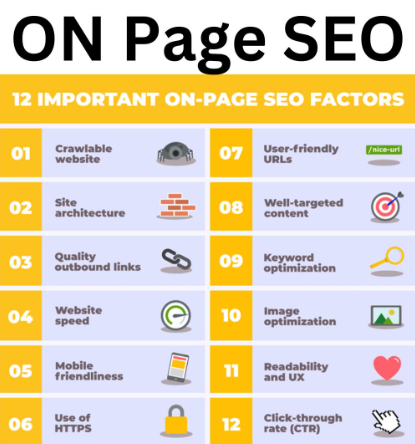
SEO ranking factors are usually divided into four main categories:
-
On-page SEO factors
-
Off-page SEO factors
-
Technical SEO factors
-
User experience factors
Each category plays a crucial role in improving website rankings.
1. High-Quality Content
Content is one of the most important SEO ranking factors. Search engines prioritize websites that provide valuable, relevant, and informative content for users.
High-quality content helps search engines understand the purpose of a webpage and determine whether it satisfies user search intent.
Characteristics of High-Quality Content
-
Original and unique
-
Well-structured and easy to read
-
Provides accurate information
-
Matches search intent
-
Includes relevant keywords
For example, a detailed blog post that thoroughly explains a topic is more likely to rank higher than short, low-quality content.
2. Keyword Optimization
Keywords are the foundation of SEO. They help search engines understand what your content is about.
Keyword optimization involves strategically placing keywords in different parts of your webpage.
Important Places for Keywords
-
Page title
-
Headings (H1, H2, H3)
-
Meta description
-
URL
-
Image alt text
-
Body content
However, it is important to avoid keyword stuffing. Search engines prefer natural and user-friendly content.
3. Backlinks
Backlinks are links from other websites pointing to your site. They are considered one of the strongest ranking signals in SEO.
Search engines view backlinks as votes of confidence. If many reputable websites link to your content, search engines consider your website trustworthy and authoritative.
Types of Backlinks
-
Natural backlinks
-
Guest post backlinks
-
Editorial backlinks
-
Directory backlinks
Quality matters more than quantity. A few links from high-authority websites are more valuable than many low-quality links.
4. Website Authority
Website authority refers to the credibility and trustworthiness of a domain.
SEO tools often measure this using metrics such as Domain Authority and Domain Rating. Websites with higher authority generally rank better in search results.
Factors influencing website authority include:
-
Quality backlinks
-
Website age
-
Content quality
-
Brand reputation
Building authority takes time but significantly improves SEO performance.
5. Page Speed
Page speed is an important technical SEO factor. Users expect websites to load quickly, and slow websites often lead to high bounce rates.
Search engines consider page speed when ranking websites because it directly affects user experience.
Ways to Improve Page Speed
-
Optimize images
-
Use caching
-
Minimize CSS and JavaScript
-
Use fast web hosting
-
Enable compression
Fast-loading websites provide better user experience and rank higher in search results.
6. Mobile-Friendly Design
Most internet users access websites using mobile devices. Because of this, search engines use mobile-first indexing.
Mobile-first indexing means that search engines primarily use the mobile version of a website for ranking and indexing.
Features of Mobile-Friendly Websites
-
Responsive design
-
Easy navigation
-
Fast mobile loading speed
-
Mobile-optimized content
Websites that are not optimized for mobile devices may struggle to rank well.
7. User Experience (UX)
User experience is a critical ranking factor because search engines want to provide the best results for users.
Good user experience includes:
-
Easy navigation
-
Clear site structure
-
Engaging content
-
Fast loading speed
Websites that keep users engaged tend to rank higher.
Important UX Metrics
-
Bounce rate
-
Dwell time
-
Pages per session
Better user engagement signals indicate valuable content.
8. Technical SEO
Technical SEO ensures that search engines can crawl, index, and understand your website.
Important technical SEO elements include:
XML Sitemap
An XML sitemap helps search engines discover your webpages.
Robots.txt
This file tells search engines which pages should or should not be crawled.
HTTPS Security
Secure websites with HTTPS encryption are preferred by search engines.
Structured Data
Structured data helps search engines understand website content and may enable rich search results.
9. Internal Linking
Internal links connect pages within the same website. They help search engines understand the structure of your website and distribute link authority.
Benefits of internal linking include:
-
Improved website navigation
-
Better crawling and indexing
-
Increased page authority
-
Improved user experience
A well-planned internal linking strategy helps boost SEO performance.
10. Search Intent Optimization
Search intent refers to the reason behind a user’s search query.
There are four main types of search intent:
-
Informational intent
-
Navigational intent
-
Transactional intent
-
Commercial intent
Content that matches the user’s search intent is more likely to rank higher.
11. Fresh and Updated Content
Search engines prefer fresh and updated content because it provides the most relevant information.
Updating old blog posts with new information can improve rankings.
Ways to keep content fresh include:
-
Updating statistics
-
Adding new sections
-
Improving readability
-
Updating keywords
Regular updates signal to search engines that your website is active and relevant.
12. Domain Age and Trust
Older domains often have stronger credibility because they have had more time to build backlinks and authority.
However, new websites can still rank well if they provide high-quality content and strong SEO optimization.
Trust signals include:
-
Secure website (HTTPS)
-
Author credibility
-
High-quality backlinks
13. Social Signals
Although social media signals are not direct ranking factors, they can influence SEO indirectly.
Content shared widely on social media platforms can generate:
-
More traffic
-
More backlinks
-
Greater brand awareness
This can indirectly improve search rankings.
14. Core Web Vitals
Core Web Vitals measure website performance and user experience.
Key metrics include:
-
Loading speed
-
Interactivity
-
Visual stability
These performance metrics help search engines evaluate the overall user experience of a webpage.
Common SEO Mistakes That Hurt Rankings
Many websites fail to rank because they make common SEO mistakes.
1. Keyword Stuffing
Using too many keywords can harm rankings.
2. Duplicate Content
Duplicate content confuses search engines and reduces ranking potential.
3. Poor Website Structure
Disorganized websites make it difficult for search engines to crawl pages.
4. Slow Page Speed
Slow websites negatively affect user experience.
5. Low-Quality Backlinks
Spammy backlinks can damage SEO performance.
Avoiding these mistakes can significantly improve your website’s ranking.
Future Trends in SEO Ranking Factors
SEO is constantly evolving. Search engines are becoming more intelligent and focusing more on user experience and content quality.
Emerging SEO trends include:
-
Artificial intelligence in search algorithms
-
Voice search optimization
-
Visual search technology
-
AI-generated content optimization
-
Personalized search results
Businesses must stay updated with SEO trends to maintain strong rankings.
Conclusion
SEO ranking factors determine how websites appear in search engine results. By understanding and implementing these factors, businesses can improve their online visibility, attract more visitors, and increase conversions.
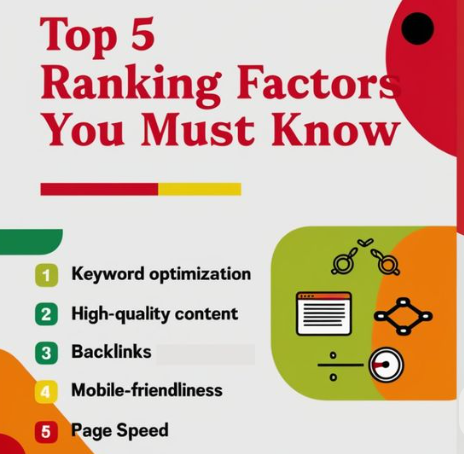
The most important SEO ranking factors include high-quality content, keyword optimization, backlinks, page speed, mobile friendliness, technical SEO, and user experience.
Successful SEO requires a long-term strategy that focuses on creating valuable content, optimizing website performance, and building strong online authority.