Table of Contents
ToggleThe Ultimate Guide to Upselling and Cross-Selling in 2026
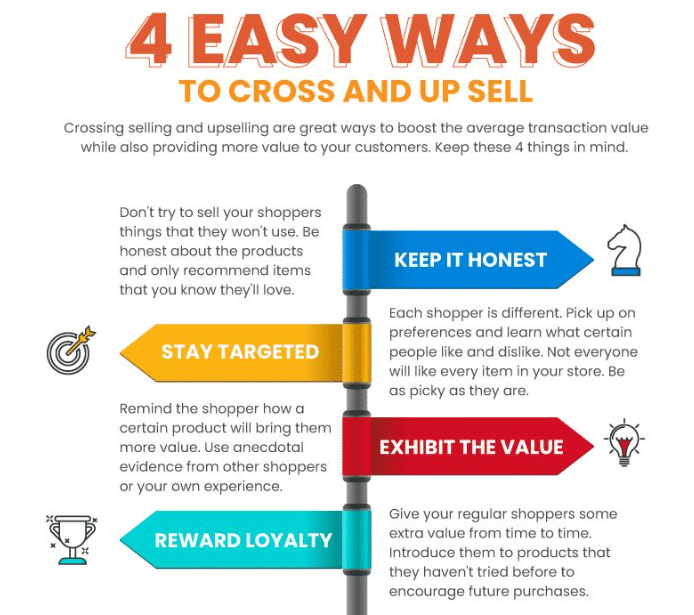
Upselling and cross-selling are two of the most powerful revenue growth strategies in modern marketing and sales. Instead of constantly chasing new customers, businesses can significantly increase profits by maximizing the value of existing customers.
In this comprehensive guide, you’ll learn everything about upselling and cross-selling—what they are, how they differ, why they matter, proven strategies, real-world examples, tools, and best practices to help you boost conversions and revenue in 2026.
What is Upselling?
Upselling is a sales technique where a customer is encouraged to purchase a more expensive, upgraded, or premium version of a product or service.
Example:
- Buying a basic smartphone → Offered a higher model with better features
- Booking a hotel room → Suggested a deluxe suite
The goal of upselling is to increase the average order value (AOV) by offering better value.
What is Cross-Selling?
Cross-selling involves recommending complementary or related products alongside the main purchase.
Example:
- Buying a laptop → Suggested a mouse, keyboard, or laptop bag
- Ordering a burger → Suggested fries and a drink
The aim is to increase the total basket size and improve customer experience.
Upselling vs Cross-Selling: Key Differences
| Factor | Upselling | Cross-Selling |
|---|---|---|
| Focus | Upgrade | Add-ons |
| Goal | Increase product value | Increase cart size |
| Example | Premium version | Related products |
| Customer Intent | Better product | Complete solution |
Both strategies are essential and often work best when combined.
Why Upselling and Cross-Selling Matter
1. Increase Revenue Without New Customers
Acquiring new customers is expensive. Upselling and cross-selling leverage existing customers to generate more revenue.
2. Improve Customer Experience
When done correctly, these strategies help customers find better solutions.
3. Boost Customer Lifetime Value (CLV)
Encouraging repeat purchases and upgrades increases long-term profitability.
4. Higher Conversion Rates
Existing customers are more likely to buy than new prospects.
5. Better ROI
Lower acquisition costs and higher order values improve marketing efficiency.
Psychology Behind Upselling and Cross-Selling
Understanding customer behavior is key.
1. Anchoring Effect
Customers compare options. Showing a higher-priced option first makes the mid-tier option more attractive.
2. Loss Aversion
People fear missing out on benefits. Highlight what they lose if they don’t upgrade.
3. Social Proof
Showing “Most Popular” or “Best Seller” increases trust.
4. Convenience
Customers prefer bundled solutions rather than searching for additional items.
5. Personalization
Tailored recommendations increase relevance and conversions.
Types of Upselling
1. Premium Upselling
Encouraging customers to buy a higher-end product.
2. Feature-Based Upselling
Highlighting additional features or benefits.
3. Subscription Upselling
Moving customers to higher subscription tiers.
4. Volume Upselling
Encouraging bulk purchases (e.g., “Buy 2, Get 1 Free”).
5. Time-Based Upselling
Offering upgrades during checkout or post-purchase.
Types of Cross-Selling
1. Complementary Products
Items that enhance the main product.
2. Bundled Products
Multiple products sold together at a discount.
3. Frequently Bought Together
Based on customer purchase patterns.
4. Add-On Services
Warranty, installation, or support.
5. Post-Purchase Cross-Selling
Follow-up recommendations after a purchase.
Best Upselling Strategies
1. Offer Value, Not Just Price
Customers should clearly see the benefits of upgrading.
Example:
Instead of saying “Upgrade for ₹500 more,” say:
“Get 2x storage, faster performance, and extended warranty for ₹500 more.”
2. Use the “Good-Better-Best” Model
Provide three pricing tiers:
- Basic
- Standard (most popular)
- Premium
This structure guides decision-making.
3. Highlight Benefits Clearly
Focus on outcomes:
- Better performance
- Longer durability
- Enhanced experience
4. Use Limited-Time Offers
Create urgency:
- “Upgrade now and save 20%”
- “Limited-time premium offer”
5. Personalize Recommendations
Use customer data to suggest relevant upgrades.
Best Cross-Selling Strategies
1. Recommend Relevant Products
Irrelevant suggestions reduce trust.
2. Use Product Bundles
Bundles simplify buying decisions and increase value perception.
3. Leverage “Frequently Bought Together”
Use data-driven suggestions to improve conversions.
4. Position Cross-Sells Strategically
Best placements:
- Product pages
- Cart page
- Checkout page
- Post-purchase emails
5. Offer Discounts on Add-Ons
Encourage additional purchases with small incentives.
Upselling and Cross-Selling in E-Commerce
Product Page Optimization
- Show upgraded versions
- Highlight key differences
- Add comparison charts
Cart Page Strategy
- Recommend complementary products
- Use urgency messages
Checkout Optimization
- Offer last-minute upgrades
- Keep it simple and non-intrusive
Post-Purchase Emails
- Recommend related products
- Offer exclusive deals
Upselling and Cross-Selling in SaaS
Free to Paid Conversion
Encourage users to upgrade to premium plans.
Feature Unlocking
Highlight advanced features available in higher plans.
Usage-Based Upselling
Suggest upgrades when users hit limits.
Upselling and Cross-Selling in Retail
In-Store Techniques
- Train staff to suggest upgrades
- Use product displays
POS (Point of Sale)
- Offer add-ons during checkout
Visual Merchandising
- Place complementary products together
Digital Tools for Upselling and Cross-Selling
1. Recommendation Engines
Use AI to suggest products based on behavior.
2. CRM Systems
Track customer preferences and purchase history.
3. Email Marketing Tools
Send personalized offers and recommendations.
4. Analytics Platforms
Measure performance and optimize strategies.
Metrics to Track
1. Average Order Value (AOV)
Measures how much customers spend per order.
2. Conversion Rate
Percentage of customers who accept offers.
3. Revenue Per Customer
Tracks overall customer value.
4. Cart Abandonment Rate
Monitor if upselling negatively affects checkout.
5. Customer Lifetime Value (CLV)
Measures long-term impact.
Common Mistakes to Avoid
1. Being Too Aggressive
Over-pushing can annoy customers.
2. Irrelevant Recommendations
Reduces trust and engagement.
3. Complicating the Buying Process
Keep offers simple and clear.
4. Ignoring Customer Experience
Focus on value, not just revenue.
5. Not Testing Strategies
Real-World Examples
E-Commerce Example
- “Customers who bought this also bought…”
- “Upgrade to premium for better performance”
SaaS Example
- “Unlock advanced features with Pro plan”
Fast Food Example
- “Would you like fries with that?”
Advanced Techniques
1. AI-Powered Personalization
Use machine learning to predict customer needs.
2. Behavioral Targeting
Offer suggestions based on browsing behavior.
3. Dynamic Pricing
Adjust prices based on demand and user behavior.
4. Gamification
Offer rewards for upgrades or bundles.
5. Subscription Bundling
Combine products into subscription packages.
Future Trends in Upselling and Cross-Selling
1. Hyper-Personalization
AI-driven recommendations tailored to individual users.
2. Voice Commerce
Upselling via voice assistants.
3. Omnichannel Integration
Seamless experience across online and offline channels.
4. Augmented Reality (AR)
Helping customers visualize upgrades and add-ons.
5. Predictive Analytics
Anticipating customer needs before they act.
Step-by-Step Strategy to Implement
Step 1: Understand Your Customers
Analyze behavior, preferences, and purchase history.
Step 2: Segment Your Audience
Create targeted groups for personalized offers.
Step 3: Create Relevant Offers
Design meaningful upgrades and add-ons.
Step 4: Optimize Placement
Show offers at the right time and place.
Step 5: Test and Improve
Continuously optimize based on performance.
Conclusion
Upselling and cross-selling are essential strategies for maximizing revenue and improving customer experience. When executed correctly, they create a win-win situation—customers get better value, and businesses increase profits.