Table of Contents
ToggleThe Best Hashtag Strategy Guide for 2026: Boost Reach, Engagement & Growth (3000 Words)
In today’s digital marketing landscape, hashtags are no longer optional—they are essential. Whether you’re a business owner, content creator, or digital marketer, mastering the best hashtag strategy can significantly increase your visibility, engagement, and brand awareness.
With ever-changing algorithms and increasing competition on platforms like Instagram, LinkedIn, and YouTube, using hashtags strategically is critical to staying relevant and discoverable.
This in-depth guide will help you understand, implement, and optimize hashtag strategies for maximum results in 2026.
What is a Hashtag Strategy?
A hashtag strategy is a structured approach to selecting, using, and optimizing hashtags to increase content reach and engagement.
Hashtags act as search tools that categorize your content, making it easier for users to find posts relevant to their interests.
Why Hashtags Are Important in 2026
1. Improve Content Discoverability
Hashtags help your content reach users beyond your followers.
2. Increase Engagement
Posts with targeted hashtags get more likes, comments, and shares.
3. Target Specific Audiences
Reach users interested in your niche.
4. Strengthen Brand Identity
Branded hashtags create recognition and community.
5. Support Social SEO
Platforms like Instagram now function like search engines.
Types of Hashtags You Must Use
1. Branded Hashtags
Unique to your brand or campaign.
Example:
#YourBusinessName
2. Industry Hashtags
Commonly used in your niche.
Example:
#DigitalMarketing #ContentMarketing
3. Niche Hashtags
Target a smaller, specific audience.
Example:
#LocalSEOServicesIndia
4. Trending Hashtags
Popular and time-sensitive hashtags.
5. Location-Based Hashtags
Target local audiences.
Example:
#DelhiBusiness #IndiaStartup
6. Community Hashtags
Used by specific groups or communities.
Example:
#EntrepreneurLife
The Perfect Hashtag Formula
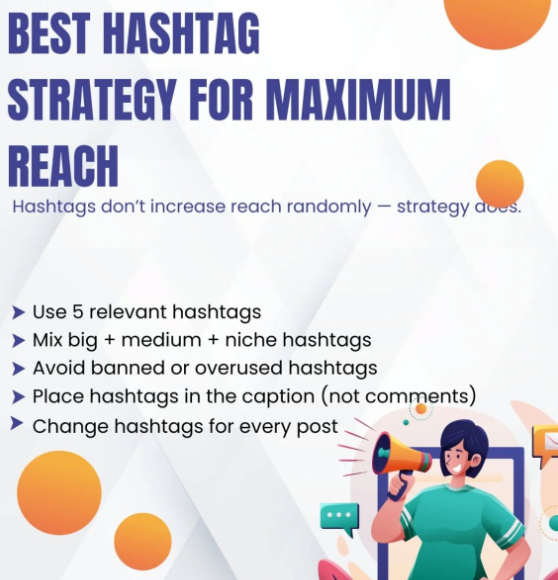
To get the best results, use a balanced mix:
- 3–5 High-volume hashtags
- 5–7 Medium-volume hashtags
- 5–8 Niche hashtags
- 1–2 Branded hashtags
This combination ensures both reach and relevance.
Platform-Specific Hashtag Strategies
Instagram Strategy
On Instagram:
- Use 5–15 hashtags
- Focus on niche and relevant tags
- Add hashtags in caption or comments
- Avoid banned hashtags
LinkedIn Strategy
On LinkedIn:
- Use 3–5 hashtags
- Focus on industry-specific terms
- Avoid overuse
YouTube Strategy
On YouTube:
- Add hashtags in title or description
- Focus on keywords
- Use 3–5 hashtags
Twitter Strategy
On Twitter:
- Use 2–3 hashtags
- Focus on trending topics
- Keep it short and impactful
Facebook Strategy
On Facebook:
- Use minimal hashtags
- Focus on relevance
How to Find the Best Hashtags
1. Use Hashtag Tools
Tools like:
- Hashtagify
- RiteTag
help you find trending and relevant hashtags.
2. Analyze Competitors
Check what hashtags competitors are using successfully.
3. Use Platform Search
Search hashtags directly on social media platforms.
4. Follow Industry Influencers
Learn from top creators in your niche.
5. Monitor Trends
Stay updated with trending hashtags.
Best Hashtag Strategies for Growth
1. Use Relevant Hashtags Only
Irrelevant hashtags reduce engagement and credibility.
2. Rotate Hashtag Sets
Avoid using the same hashtags in every post.
3. Use Long-Tail Hashtags
These are less competitive and more targeted.
4. Create Campaign-Specific Hashtags
Use unique hashtags for promotions.
5. Encourage User-Generated Content
Ask users to use your branded hashtag.
6. Track Performance
Analyze which hashtags bring the most engagement.
7. Combine SEO and Hashtags
Use keyword-based hashtags for better reach.
8. Use Hashtags in Stories and Reels
Boost discoverability across formats.
9. Focus on Engagement
Interact with posts using similar hashtags.
10. Keep It Clean
Avoid cluttering posts with too many hashtags.
Advanced Hashtag Strategies
1. Hashtag Clustering
Create groups of hashtags for different content categories.
2. A/B Testing Hashtags
Test different hashtag combinations to see what works best.
3. Geo-Targeting
Use location-based hashtags for local reach.
4. Trend Hijacking
Use trending hashtags creatively (but relevantly).
5. Content-Specific Hashtags
Match hashtags with content type (video, blog, reel).
Metrics to Track Hashtag Performance
- Reach
- Impressions
- Engagement rate
- Follower growth
- Click-through rate
Common Hashtag Mistakes to Avoid
1. Using Too Many Hashtags
Can appear spammy.
2. Using Irrelevant Tags
Reduces trust and engagement.
3. Ignoring Analytics
Leads to poor performance.
4. Using Banned Hashtags
Can limit visibility.
5. Copy-Pasting Hashtags
Reduces reach over time.
Real-World Example
Scenario:
A digital marketing agency wants more visibility.
Strategy:
- Uses niche hashtags
- Tracks engagement
- Updates hashtag sets
Result:
- Increased reach
- Higher engagement
- More followers
Future Trends in Hashtag Strategy
1. AI-Powered Hashtags
Tools will suggest optimized hashtags automatically.
2. Search-Based Discovery
Hashtags will work like keywords in SEO.
3. Voice Search Integration
Hashtags may adapt to voice queries.
4. Visual Search
Image recognition will influence hashtag relevance.
5. Community Growth
Niche communities will dominate hashtag usage.
Step-by-Step Hashtag Strategy Plan
Step 1: Define Your Goal
Traffic, engagement, or brand awareness.
Step 2: Research Hashtags
Use tools and competitor analysis.
Step 3: Create Hashtag Sets
Organize hashtags into categories.
Step 4: Add to Content
Use hashtags strategically in posts.
Step 5: Track Results
Monitor performance metrics.
Step 6: Optimize Strategy
Conclusion
A well-planned hashtag strategy is one of the simplest yet most powerful ways to grow your social media presence. By using the right mix of hashtags, analyzing performance, and staying updated with trends, you can significantly boost your reach and engagement.