Table of Contents
ToggleBest Google Algorithm Ranking Guide: The Complete 3000-Word SEO Strategy for Higher Search Rankings
In the modern digital world, ranking high on search engines is one of the most important goals for businesses, bloggers, and marketers. When people search for information online, most of them click results that appear on the first page of search engines. Websites that rank higher receive significantly more traffic, visibility, and business opportunities.
Search engines use complex systems known as algorithms to determine which pages appear in search results. Understanding how the Google ranking algorithm works can help you optimize your website effectively and improve your chances of ranking higher.
This comprehensive guide explains the best strategies to align with Google’s algorithm and improve your website’s search rankings.
What is the Google Algorithm?
The Google algorithm is a complex system used by the search engine to retrieve data from its index and deliver the best possible results for a user’s query.
Instead of manually ranking websites, Google uses automated algorithms that analyze hundreds of ranking factors to determine which pages are the most relevant and useful.
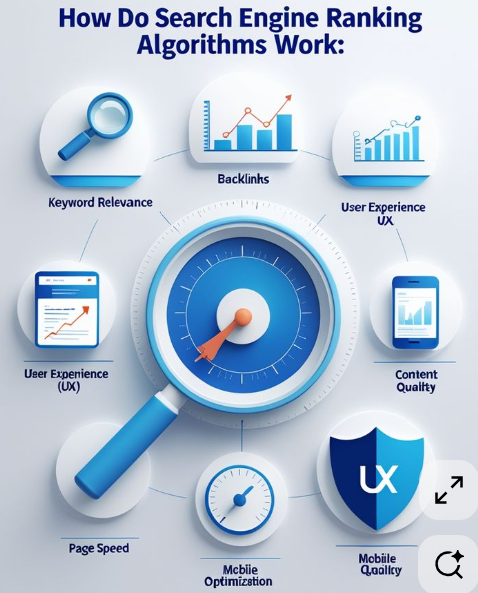
These algorithms evaluate elements such as:
-
Content relevance
-
Website authority
-
User experience
-
Page speed
-
Backlinks
-
Mobile usability
Google continuously updates its algorithm to improve search quality and deliver more accurate results.
Why Google Algorithm Understanding is Important
Understanding the Google algorithm helps marketers and website owners optimize their websites properly.
Higher Search Rankings
Websites optimized according to algorithm guidelines have a better chance of ranking on the first page of search results.
Increased Organic Traffic
Higher rankings lead to more visitors from search engines.
Organic traffic is one of the most valuable traffic sources.
Better User Experience
Google prioritizes websites that provide useful and high-quality experiences for users.
Following algorithm guidelines improves overall website usability.
Long-Term SEO Success
Websites that follow ethical SEO practices are less likely to be affected by algorithm penalties.
Major Google Ranking Factors
Although Google does not publicly reveal all ranking factors, SEO experts have identified several important signals that influence rankings.
1. High-Quality Content
Content remains the most important ranking factor.
Google prioritizes content that provides valuable, accurate, and helpful information.
High-quality content usually includes:
-
Detailed explanations
-
Original insights
-
Clear structure
-
Useful examples
Content should answer user questions effectively.
2. Keyword Optimization
Keywords help search engines understand what your content is about.
However, keyword usage should be natural and relevant.
Important keyword locations include:
Title tags
Headings
Meta descriptions
Content body
Image alt text
Overusing keywords can harm SEO performance.
3. Backlinks
Backlinks are links from other websites pointing to your content.
They act as signals of trust and authority.
Websites with strong backlink profiles often rank higher in search results.
Quality matters more than quantity when building backlinks.
Links from reputable websites are more valuable.
4. Search Intent
Google focuses heavily on search intent, which refers to the reason behind a user’s search query.
There are four common types of search intent:
Informational – searching for information
Navigational – looking for a specific website
Commercial – researching products
Transactional – ready to purchase
Content must match the intent of the search query.
5. Page Experience
User experience is an important ranking factor.
Google evaluates how users interact with your website.
Important user experience signals include:
Page loading speed
Mobile friendliness
Easy navigation
Secure browsing
Better user experience improves engagement and rankings.
6. Mobile Optimization
Most internet users access websites through smartphones.
Google uses mobile-first indexing, meaning it evaluates the mobile version of your website first.
Mobile-friendly websites are more likely to rank higher.
Responsive design and fast mobile loading speeds are essential.
7. Website Speed
Page speed significantly impacts user experience and search rankings.
Slow websites cause visitors to leave quickly.
Improving speed can be achieved by:
Compressing images
Reducing unnecessary scripts
Using fast hosting
Implementing caching
Faster websites provide better experiences for users.
8. Domain Authority
Websites with strong authority tend to rank higher in search results.
Authority is built through:
Quality backlinks
Consistent content publishing
Brand credibility
User trust
Domain authority develops over time with consistent SEO efforts.
9. Internal Linking
Internal linking helps search engines discover and understand your website pages.
Benefits include:
Better crawling
Improved site navigation
Stronger page authority distribution
Linking related content improves both SEO and user experience.
10. Fresh Content
Google favors websites that regularly update their content.
Publishing new articles and updating old content signals that the website remains active and relevant.
Fresh content often performs better in competitive search results.
Important Google Algorithm Updates
Google frequently releases updates to improve search quality.
Some updates have significantly changed SEO strategies.
Panda Update
The Panda update focused on content quality.
Websites with thin or low-quality content experienced ranking drops.
High-quality content became essential for SEO success.
Penguin Update
Penguin targeted spammy backlinks and manipulative link-building practices.
Websites using unnatural link strategies were penalized.
Ethical link-building became more important after this update.
Hummingbird Update
Hummingbird improved Google’s understanding of search intent.
It allowed the algorithm to interpret conversational queries more accurately.
This update emphasized natural language content.
RankBrain
RankBrain introduced artificial intelligence into search ranking.
It helps Google better understand complex search queries.
User behavior signals became more important after this update.
Helpful Content Update
The Helpful Content update prioritizes content written for people rather than search engines.
Content that provides real value to users is rewarded with higher rankings.
Best SEO Strategies to Rank Higher in Google
To succeed with Google’s algorithm, websites must follow proven SEO strategies.
Create Comprehensive Content
Detailed and well-researched content performs better in search results.
Long-form articles often attract more backlinks and engagement.
Focus on solving user problems and answering questions.
Conduct Keyword Research
Keyword research helps identify topics people are searching for.
Target keywords with:
High search volume
Moderate competition
Clear search intent
Long-tail keywords often provide better ranking opportunities.
Build High-Quality Backlinks
Backlinks remain one of the strongest ranking signals.
Effective link-building strategies include:
Guest blogging
Creating shareable content
Industry collaborations
Outreach campaigns
Natural links from authoritative websites improve credibility.
Optimize On-Page SEO
On-page SEO helps search engines understand your content.
Important elements include:
Optimized title tags
Meta descriptions
Header tags
Keyword placement
Image optimization
Proper on-page optimization strengthens search rankings.
Improve Technical SEO
Technical SEO ensures that search engines can easily crawl and index your website.
Important technical factors include:
XML sitemaps
Secure HTTPS connections
Clean URL structures
Fast loading speeds
Regular technical audits help maintain SEO health.
Focus on User Engagement
User engagement signals influence search rankings.
Encourage visitors to interact with your content by:
Adding visuals
Including videos
Providing clear calls to action
Writing engaging headlines
Higher engagement indicates valuable content.
Avoid Black Hat SEO
Black hat SEO techniques attempt to manipulate search rankings.
Examples include:
Keyword stuffing
Buying spam backlinks
Hidden text
Duplicate content
Google penalizes websites that use unethical tactics.
Focus on sustainable SEO strategies instead.
Measuring SEO Performance
Tracking SEO performance helps evaluate your optimization efforts.
Important metrics include:
Organic traffic
Keyword rankings
Click-through rates
Bounce rates
Conversion rates
Analyzing these metrics allows you to refine your SEO strategy.
Future Trends in Google Algorithm Ranking
Search engine algorithms continue to evolve.
Several trends will influence future ranking factors.
Artificial intelligence integration
Voice search optimization
User experience signals
Visual search growth
Content personalization
Websites that adapt to these trends will maintain strong search visibility.
Conclusion
Understanding how the Google algorithm works is essential for achieving long-term SEO success. Search engines prioritize websites that provide valuable content, strong user experience, and credible authority.
By focusing on high-quality content, keyword optimization, backlinks, technical SEO, and user engagement, businesses and bloggers can significantly improve their search rankings.
Rather than chasing shortcuts, successful SEO strategies focus on building trust, relevance, and authority over time.