Table of Contents
ToggleThe Ultimate Guide to Google Ranking Factors (2026 Edition)
Word Count: ~3000 words
Purpose: Explain all major Google ranking factors in a deep, search-optimized, practical way
Introduction
In today’s digital landscape, ranking high on Google isn’t optional — it’s foundational to visibility, credibility, and business growth.
Every day, billions of searches are performed on Google. Of all those searches, only the top results receive meaningful clicks. But what determines which pages rank at the top?
The answer lies in Google ranking factors — hundreds of signals and algorithms that decide how search results are ordered. Some are well-known (like content relevance) while others are subtle (like Core Web Vitals).
In this comprehensive guide, we’ll unpack:
-
What ranking factors are
-
How Google uses them
-
The most important factors you should optimize in 2026
-
Practical strategies to improve your ranking
-
Common misconceptions and mistakes
Whether you’re a beginner or seasoned SEO specialist, this guide will help you build a future-proof optimization strategy.
🔍 Chapter 1 — Understanding Google Ranking Factors
What Are Google Ranking Factors?
Google ranking factors are signals that Google’s algorithms analyze to determine where a webpage should appear in search results. These signals come from multiple sources, including:
-
Content quality and relevance
-
Website performance and structure
-
User experience metrics
-
Backlinks and authority
-
Search intent understanding
-
Technical optimization
They influence everything from position zero (featured snippets) to local pack results and traditional organic rankings.
Important: Google uses machine learning and AI systems (like RankBrain and BERT) to interpret these signals rather than fixed rules. So ranking factors are less about static checkboxes and more about how well your content answers user intent.
📌 Chapter 2 — Top Google Ranking Factors You Must Know
Below are the most critical ranking factors that consistently influence SEO performance in 2026.
1. Expertise, Authoritativeness & Trustworthiness (E-A-T)
E-A-T isn’t a direct ranking signal like “keyword in title,” but it’s heavily influential.
🔹 Google evaluates content credibility based on:
-
Author credentials
-
Quality and originality of content
-
Trust signals (citations, references)
-
Reputation and backlinks
Especially in YMYL topics — Your Money or Your Life (health, legal, finance) — E-A-T is crucial.
How to optimize E-A-T:
-
Showcase author bios with credentials
-
Cite reputable references
-
Update content regularly
-
Avoid plagiarism; use original insights
2. High-Quality Content
Content remains the most important ranking factor: but quality over quantity.
Good content must:
✔ Satisfy user intent
✔ Be easy to read and well structured
✔ Offer more value than competitors
✔ Cover topics comprehensively (topical authority)
Keyword stuffing and surface-level pages are no longer enough.
Content optimization checklist:
-
Clear headings (H1, H2, H3)
-
Targeting search intent (informational, transactional, navigational)
-
Natural keyword use (semantic NLP keywords)
-
Relevant internal links
-
Freshness and updates
3. Search Intent Alignment
Google’s algorithms prioritize pages that intuitively match what users want when they search.
Intent types:
-
Informational: “what are Google ranking factors”
-
Navigational: “Wikipedia login”
-
Transactional: “buy air purifier”
-
Commercial investigation: “best air purifiers 2026”
Best practice: Structure content based on the goal behind the keyword.
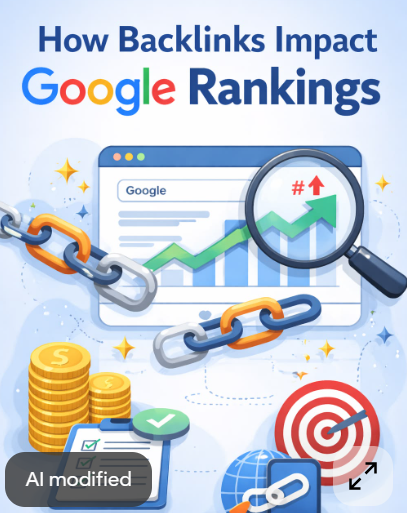
4. Backlinks — Quality Over Quantity
Backlinks remain a strong ranking factor.
But not all backlinks are equal. Google values:
✔ Relevant links from high-authority domains
✔ Editorial links (natural, contextual)
✔ Links from niche authoritative sites
Avoid low-quality links or link spam — these can trigger penalties.
Earning strong backlinks:
-
Publish linkable assets (studies, guides, tools)
-
Outreach to relevant bloggers
-
Broken link building
-
Guest posting on respected sites
5. Page Experience Signals (UX)
Google officially uses page experience data through Core Web Vitals.
These include:
📌 Largest Contentful Paint (LCP)
📌 First Input Delay (FID) / Interaction to Next Paint (INP)
📌 Cumulative Layout Shift (CLS)
Fast, stable, and responsive pages are more likely to rank.
6. Mobile-First Indexing
Google indexes sites using the mobile version by default.
This means:
-
Your mobile site must have the same or better content and structure than desktop
-
Responsive design is essential
-
Mobile performance matters
7. HTTPS & Security
Security signals matter for trust and rankings.
✔ HTTPS encryption
✔ No malicious scripts
✔ Secure user data
Not only does HTTPS support ranking, it prevents Google warnings about insecure sites.
8. On-Page SEO Elements
Core on-page elements still play a role:
-
Title tags
-
Meta descriptions
-
Header tags
-
Image alt text
-
Keyword optimization
These help Google understand context.
9. Structured Data & SERP Enhancements
Structured data helps Google serve rich results such as:
✨ Featured snippets
✨ Knowledge panels
✨ FAQs
✨ Product stars
Using JSON-LD schema increases visibility and CTR.
10. Page Load Speed
Pages that load quickly improve engagement and ranking.
Tools to optimize speed:
-
Image compression
-
Lazy loading
-
Minimizing scripts
-
CDN usage
🔄 Chapter 3 — Advanced Signals and Trends
Beyond classic factors, Google uses sophisticated systems like:
AI and Natural Language Understanding (NLP)
Projects like BERT and MUM understand content semantics and context, not just keywords.
Focus on topic depth and natural language to align with these systems.
User Interaction Signals (Behavioral Metrics)
Google analyzes:
-
Click-through rate (CTR)
-
Dwell time
-
Bounce rate
-
Return visits
-
Scroll depth
High engagement correlates with content quality.
Content Freshness & Updates
For some queries, fresher content ranks better.
Especially in:
-
News
-
Tech
-
Health
-
Reviews
Update regularly to maintain relevance.
🛠 Chapter 4 — Technical SEO Checklist
Technical foundations are vital for crawling and indexing.
🚀 Crawling & Indexing
-
XML sitemap
-
Robots.txt
-
Canonicals
-
No duplicate pages
📱 Mobile Compatibility
-
Responsive design
-
Touch-friendly UI
-
Fast mobile load
🧠 Site Structure & Navigation
Good site architecture helps:
✔ Crawl efficiency
✔ Link equity distribution
✔ User navigation
Use silo structures for topic clusters.
🔄 Core Web Vitals Technical Fixes
-
Optimize LCP elements
-
Reduce JavaScript bottlenecks
-
Improve server response time
-
Reserve space for visual elements (fix CLS)
📊 Chapter 5 — Content Strategy for 2026
Ranking well in 2026 requires strategic content planning.
1. Topical Clusters & Pillar Pages
Create clusters rather than isolated pages.
Example:
Pillar Page: Search Engine Optimization
Cluster Topics:
-
Keyword research
-
Backlink strategies
-
Technical SEO
-
Local SEO
This signals authority and strengthens internal linking.
2. Long-Form Comprehensive Content
Longer, in-depth articles tend to rank better — if they serve intent and are well structured.
A typical length: 2000+ words for competitive keywords.
3. Answer User Questions Directly
Use FAQ sections, structured data, and bullet points to answer common questions clearly.
This increases chances for:
⭐ Featured snippets
⭐ People Also Ask (PAA) appearance
4. Multimedia Integration
Combine:
-
Text
-
Images
-
Infographics
-
Videos
-
Interactive tools
Rich media increases engagement and time on page.
📈 Chapter 6 — Off-Page SEO: What Matters Today
Off-page signals inform how Google views the authority and popularity of your site.
Backlink Authority
Focus on:
✔ Contextual links
✔ Relevant niche publications
✔ Editorial mentions
Avoid:
❌ Paid links
❌ Link farms
❌ Low-value directories
Brand Mentions & Social Signals
While social signals may not be direct ranking signals, they:
-
Increase visibility
-
Boost referral traffic
-
Help earn backlinks
Promote content on social platforms strategically.
Local SEO Signals
For local businesses:
✔ Google Business Profile
✔ Local citations
✔ Reviews & ratings
✔ NAP consistency
Local intent matters greatly for region-based searches.
🚫 Chapter 7 — Common SEO Myths Debunked
Myth #1 — “More keywords will improve ranking”
Truth: Keyword stuffing harms relevance and UX.
Myth #2 — “Meta descriptions influence rankings”
Truth: Meta descriptions do not directly affect ranking but influence CTR.
Myth #3 — “Backlinks don’t matter anymore”
Truth: They remain a core signal of authority and trust.
Myth #4 — “Content length guarantees ranking”
Truth: Quality and intent alignment matter more than word count.
🧠 Chapter 8 — Monitoring & Measuring Success
To measure SEO performance, use:
Essential Tools
-
Google Analytics
-
Google Search Console
-
Ahrefs / SEMrush / Moz
-
PageSpeed Insights
-
Screaming Frog
Key Metrics to Track
✔ Impressions
✔ Clicks & CTR
✔ Average position
✔ Core Web Vitals
✔ Organic traffic
✔ Bounce rate
✔ Conversion rate
Track progress monthly and identify patterns.
🧩 Chapter 9 — Practical SEO Strategy (90-Day Plan)
Phase 1 — Audit (Weeks 1–2)
-
Perform content audit
-
Identify technical issues
-
Map keyword gaps
Phase 2 — Optimization (Weeks 3–8)
-
Fix technical issues
-
Update existing content
-
Improve metadata
-
Enhance internal linking
Phase 3 — Expansion (Weeks 9–12)
-
Publish new pillar posts
-
Build content clusters
-
Outreach for backlinks
Phase 4 — Measure & Iterate (Ongoing)
-
Check analytics
-
Adjust based on data
-
Refresh and repurpose old content
🔚 Conclusion
Ranking on Google is no longer about tricks — it’s about creating value, solving user intent, and building authority. While ranking factors evolve with AI, machine learning, and search habits, the core principle remains:
Serve your audience exceptionally well.
By focusing on content quality, user experience, technical performance, relevance, and credibility, you give your site the best chance to rank — not just today, but in the future.
👍 Ready to Use This as a Blog Post
You can enhance this article by:
🖼 Adding images & charts
📌 Including specific examples
🔗 Linking to authoritative sources
📅 Updating annually with new ranking insights