Table of Contents
ToggleThe Best Integrated Marketing Strategy: The Complete 3000-Word Guide to Building a Unified Growth Engine
Modern customers don’t move in straight lines. They discover brands on Instagram, compare options on Google, read reviews on YouTube, receive emails, and maybe walk into a physical store before making a purchase. If your marketing channels operate independently, you create friction. If they work together, you create momentum.
That momentum is called integrated marketing.
This comprehensive guide will show you what integrated marketing really means, why it matters more than ever, and how to build a high-performing integrated marketing system that drives awareness, trust, and revenue—consistently.
What Is Integrated Marketing?
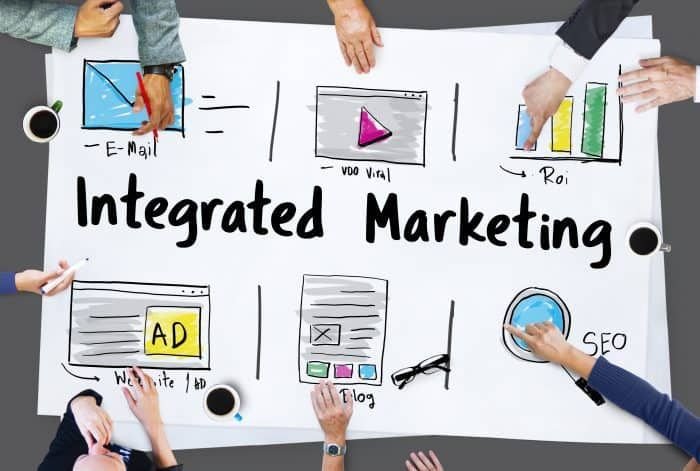
Integrated marketing is a strategic approach that aligns all marketing channels, messaging, and touchpoints to create a unified and seamless customer experience.
Instead of running separate campaigns for SEO, social media, email, paid ads, and offline marketing, integrated marketing ensures every channel works toward the same objective using consistent messaging and coordinated timing.
It is not about being everywhere.
It is about being aligned everywhere.
Why Integrated Marketing Is Essential Today
Consumers interact with brands across multiple platforms before making decisions. If your messaging differs from one channel to another, trust erodes. If your campaigns compete instead of collaborate, budget gets wasted.
Here’s why integrated marketing is critical:
1. Customers Expect Consistency
Brand consistency increases revenue and recognition. When visuals, tone, and messaging remain aligned across platforms, your brand becomes more memorable.
2. Higher Marketing ROI
When channels support one another:
-
Social drives traffic to blogs.
-
Blogs improve SEO.
-
SEO fuels retargeting ads.
-
Email nurtures paid traffic.
The result? Stronger conversions with lower acquisition costs.
3. Stronger Brand Authority
Integrated campaigns amplify your positioning. Instead of fragmented messages, you reinforce one powerful idea across multiple touchpoints.
4. Improved Customer Experience
Customers feel guided—not pushed—when your marketing ecosystem flows naturally.
Core Components of a Successful Integrated Marketing Strategy
To execute integrated marketing properly, you must align five key pillars:
1. Unified Brand Messaging
Your brand should sound and look the same everywhere.
This includes:
-
Brand voice
-
Core value proposition
-
Taglines
-
Visual identity
-
Storytelling themes
Whether someone sees your LinkedIn post or a YouTube ad, the experience should feel cohesive.
2. Customer Journey Mapping
Integrated marketing starts with understanding how customers move.
Map out:
-
Awareness stage
-
Consideration stage
-
Decision stage
-
Retention stage
-
Advocacy stage
Each channel should serve a clear role in this journey.
3. Cross-Channel Content Strategy
Content is the glue that holds integration together.
For example:
-
A blog article becomes LinkedIn posts.
-
That content becomes a YouTube script.
-
Snippets become Instagram Reels.
-
Email newsletters summarize insights.
-
Paid ads promote top-performing pieces.
This creates message reinforcement across platforms.
4. Data & Analytics Alignment
Integrated marketing requires centralized tracking.
Key metrics to monitor:
-
Customer acquisition cost (CAC)
-
Customer lifetime value (LTV)
-
Multi-touch attribution
-
Conversion rate across channels
-
Engagement quality
Avoid isolated reporting. Measure impact holistically.
5. Cross-Team Collaboration
Marketing, sales, and customer success must work together.
Disconnected teams break integrated systems.
Regular collaboration ensures:
-
Consistent messaging
-
Shared objectives
-
Real-time campaign optimization
Channels That Power Integrated Marketing
Let’s break down how major channels work together.
Content Marketing
Content forms the backbone of integrated campaigns.
Examples:
-
Blogs
-
Case studies
-
Whitepapers
-
Videos
-
Podcasts
Content feeds SEO, social media, email, and ads. Without strong content, integration lacks depth.
Social Media Marketing
Social media amplifies content and builds brand personality.
Effective integration includes:
-
Aligning social posts with campaign themes
-
Promoting blog and video content
-
Running retargeting ads to engaged users
-
Encouraging user-generated content
Platforms like Instagram, LinkedIn, and YouTube work best when synchronized.
Email Marketing
Email nurtures relationships and supports conversions.
In an integrated approach:
-
Emails promote content campaigns.
-
Messaging aligns with paid ads.
-
Offers match landing pages.
-
Follow-ups align with sales conversations.
Email bridges interest and action.
Search Engine Optimization (SEO)
SEO supports long-term discoverability.
Integrated SEO means:
-
Aligning blog content with paid keywords
-
Supporting PR campaigns with backlinks
-
Optimizing landing pages used in ads
Organic visibility compounds results over time.
Paid Advertising
Paid media accelerates momentum.
Integrated advertising:
-
Retargets social engagement
-
Promotes high-performing blog posts
-
Reinforces email campaigns
-
Supports product launches
Paid campaigns should amplify—not replace—organic efforts.
Offline Marketing
Integrated marketing includes offline efforts too.
Examples:
-
Events promoted via social and email
-
QR codes linking to landing pages
-
Print campaigns aligned with digital ads
Offline should feed online tracking systems.
Step-by-Step Framework to Build the Best Integrated Marketing Strategy
Step 1: Define Clear Business Objectives
Start with outcomes like:
-
Revenue growth
-
Market expansion
-
Lead generation
-
Brand awareness
Every channel must serve these objectives.
Step 2: Create a Campaign Theme
Strong integrated campaigns revolve around a core message.
Example:
-
“Future-Ready Marketing”
-
“AI-Powered Growth”
-
“Customer-First Commerce”
This theme should appear across blogs, social posts, ads, and emails.
Step 3: Develop Modular Content
Create long-form pillar content, then repurpose it across channels.
One 3,000-word article can become:
-
20 LinkedIn posts
-
5 email newsletters
-
10 short-form videos
-
3 ad creatives
-
1 webinar
Efficiency is key.
Step 4: Align Timing Across Channels
Campaign launches must be synchronized.
For example:
-
Blog publishes Monday.
-
Email goes out Tuesday.
-
Paid ads launch Wednesday.
-
Social promotion runs all week.
-
Webinar occurs Friday.
Coordination multiplies impact.
Step 5: Implement Unified Tracking
Use centralized dashboards and CRM tools to monitor:
-
Channel attribution
-
Engagement flow
-
Conversion pathways
-
Revenue contribution
Avoid optimizing channels in isolation.
Step 6: Optimize and Iterate
Integrated marketing is dynamic.
Test:
-
Messaging variations
-
Channel timing
-
Creative formats
-
Audience segments
Continuous improvement strengthens the system.
Real-World Integrated Marketing Examples
Apple
Apple’s product launches integrate:
-
Teaser campaigns
-
Social media hype
-
Influencer coverage
-
Email announcements
-
Retail store experiences
Every touchpoint reinforces premium positioning.
Nike
Nike integrates emotional storytelling across:
-
Social campaigns
-
Athlete partnerships
-
Mobile apps
-
Events
-
E-commerce
The message remains powerful and consistent: empowerment and performance.
Coca-Cola
Coca-Cola aligns TV ads, digital media, in-store displays, and social campaigns around shared themes of happiness and connection.
Their integration builds global brand recall.
Common Integrated Marketing Mistakes
Avoid these pitfalls:
-
Running isolated campaigns
-
Inconsistent messaging
-
Ignoring the customer journey
-
Overusing one channel
-
Measuring vanity metrics instead of revenue
Integration fails when strategy is absent.
Key Metrics to Measure Success
The best integrated marketing strategies track:
-
Cross-channel conversion rate
-
Customer lifetime value
-
Revenue per campaign
-
Retention rate
-
Assisted conversions
-
Brand search volume
Look for synergy—not just individual performance.
Integrated Marketing vs Omnichannel Marketing
These terms are often confused.
Omnichannel marketing focuses on providing seamless customer experiences across platforms.
Integrated marketing focuses on aligning messaging, campaigns, and strategy across platforms.
The Future of Integrated Marketing
Marketing is becoming more data-driven and AI-powered.
Future trends include:
-
AI-based personalization
-
Predictive audience targeting
-
First-party data ecosystems
-
Automated campaign orchestration
-
Cross-channel attribution modeling
Integration will become increasingly automated—but strategy will always matter.
Final Thoughts: Building a Unified Growth Engine
Integrated marketing is not about complexity.
It is about coordination.
When your SEO supports your ads, your ads support your email, your email supports your sales team, and your content supports everything—you create a self-reinforcing growth engine.
Instead of asking:
“Which channel performs best?”
Ask:
“How do all channels perform together?”
That shift transforms marketing from scattered efforts into a strategic system.
And systems scale.