Table of Contents
ToggleThe Best Marketing Psychology Tips in 2026: A Complete 3000-Word Guide to Influence, Persuasion & Conversions
Marketing is not just about products, ads, or content.
It’s about people.
And people make buying decisions emotionally first — then justify them logically.
If you understand marketing psychology, you don’t have to “convince” customers. You simply align your messaging with how the human brain already works.
In this comprehensive guide, you’ll learn the most powerful marketing psychology principles, how to apply them ethically, and how to increase conversions across websites, ads, social media, and email campaigns.
1. Why Marketing Psychology Matters More Than Ever
In 2026:
-
Consumers are overloaded with information
-
Attention spans are shorter
-
Competition is higher
-
Trust is harder to earn
Brands that understand psychology:
-
Capture attention faster
-
Build trust quicker
-
Increase conversion rates
-
Reduce customer acquisition costs
Psychology is the invisible force behind every successful campaign.
2. The Science Behind Buying Decisions
Research in behavioral economics and psychology — popularized by experts like Daniel Kahneman — shows that humans operate using two thinking systems:
-
System 1: Fast, emotional, automatic
-
System 2: Slow, logical, analytical
Most buying decisions happen in System 1.
Your marketing should speak to emotions first, then support with logic.
3. The Most Powerful Marketing Psychology Principles
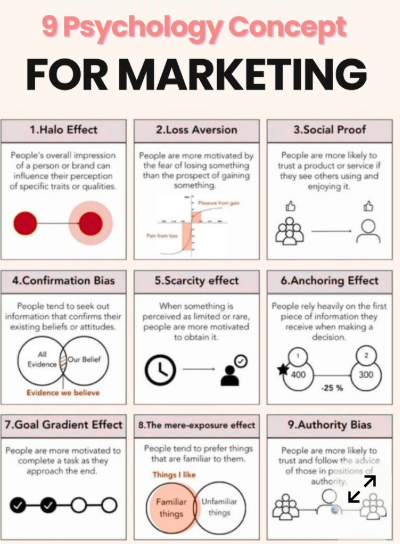
1. The Principle of Scarcity
People value what is limited.
Examples:
-
“Only 3 items left”
-
“Offer ends tonight”
-
“Limited edition”
Scarcity triggers fear of missing out (FOMO).
Used properly, scarcity increases urgency and sales.
But false scarcity destroys trust.
2. The Principle of Social Proof
Humans look to others for validation.
Coined by Robert Cialdini in his work on influence, social proof suggests:
“If others are buying it, it must be good.”
Ways to use it:
-
Customer reviews
-
Testimonials
-
Case studies
-
User-generated content
-
Influencer endorsements
-
“10,000+ customers served”
Platforms like Amazon and Flipkart heavily rely on review psychology.
3. The Authority Principle
People trust experts.
Display:
-
Certifications
-
Awards
-
Media mentions
-
Industry partnerships
-
Expert endorsements
Logos from trusted platforms like Google or Forbes increase credibility.
Authority reduces buying hesitation.
4. Reciprocity
When you give value first, people feel compelled to return the favor.
Examples:
-
Free guides
-
Free trials
-
Free consultations
-
Helpful content
This is why lead magnets work so well.
Give before asking.
5. The Anchoring Effect
The first number people see influences perception.
Example:
Was ₹9,999 → Now ₹4,999
The original price anchors value.
Luxury brands use anchoring strategically to justify pricing.
6. Loss Aversion
People fear losses more than they desire gains.
Instead of:
“Gain 20% more revenue”
Say:
“Stop losing 20% of potential revenue”
Loss-focused messaging often converts better.
7. The Decoy Effect
Offer three pricing options:
-
Basic
-
Standard
-
Premium
Most people choose the middle option.
This psychological pricing strategy increases average order value.
8. Commitment & Consistency
When people commit to small actions, they’re more likely to take bigger ones.
Example funnel:
-
Download free guide
-
Join webinar
-
Book consultation
-
Purchase premium service
Small yes → Bigger yes.
9. The Halo Effect
When one positive trait influences overall perception.
Example:
High-quality website design increases perceived product quality.
Good branding builds trust instantly.
10. The Power of Storytelling
Stories activate emotional centers of the brain.
Instead of:
“Our product improves productivity.”
Tell:
“A struggling entrepreneur doubled revenue using this system.”
Stories sell better than features.
4. Psychological Triggers in Website Design
1. Color Psychology
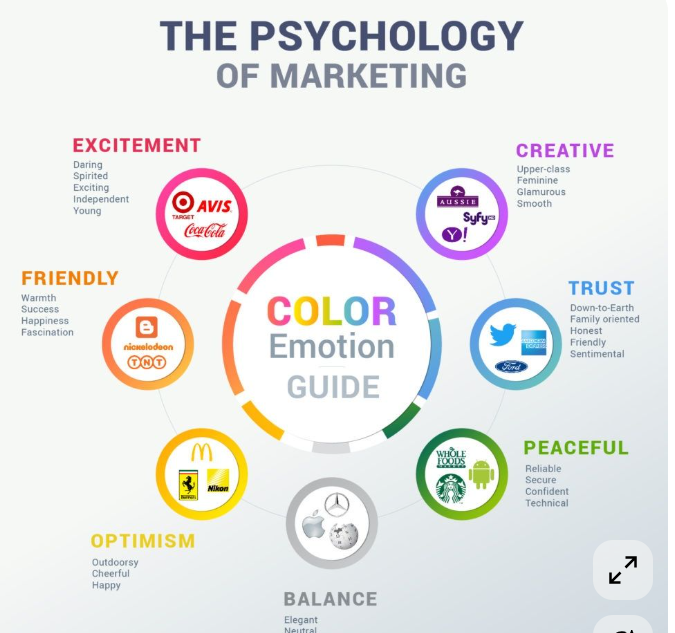
Different colors evoke emotions:
-
Blue → Trust
-
Red → Urgency
-
Green → Growth
-
Black → Luxury
-
Yellow → Optimism
Brands like Coca-Cola use red for energy and excitement.
2. Simplicity & Cognitive Ease
The brain prefers simplicity.
Reduce:
-
Clutter
-
Too many choices
-
Complex navigation
Clear design increases conversions.
3. Visual Hierarchy
Highlight:
-
Headlines
-
Call-to-action buttons
-
Benefits
Guide the eye intentionally.
5. Marketing Psychology in Social Media
Platforms like:
-
Instagram
-
Facebook
-
TikTok
-
YouTube
rely heavily on psychological triggers.
Use Emotional Hooks
First 3 seconds determine retention.
Use:
-
Curiosity
-
Surprise
-
Bold claims
-
Questions
Show Social Validation
Likes, comments, and shares influence perception.
Encourage engagement.
6. Email Marketing Psychology
Emails convert when they:
-
Use curiosity-driven subject lines
-
Personalize content
-
Create urgency
-
Use storytelling
-
Include strong CTAs
Example:
Instead of:
“Weekly Newsletter #32”
Try:
“Why 73% of Businesses Fail at This (Are You?)”
Curiosity drives opens.
7. Pricing Psychology
1. Charm Pricing
₹999 feels cheaper than ₹1000.
2. Bundling
Offer:
-
Product A + Product B
-
Complete package
Increases perceived value.
3. Payment Plans
₹999/month feels easier than ₹12,000 upfront.
Lower psychological barrier.
8. Emotional Marketing Triggers
Most buying decisions are emotional.
Common emotional drivers:
-
Fear
-
Hope
-
Belonging
-
Status
-
Security
-
Success
-
Love
-
Achievement
Luxury brands sell status.
Insurance companies sell security.
Fitness brands sell confidence.
Understand the emotional driver behind your audience.
9. Psychological Copywriting Tips
1. Use “You” More Than “We”
Focus on customer benefits.
2. Use Power Words
Examples:
-
Proven
-
Exclusive
-
Secret
-
Instant
-
Guaranteed
-
Limited
But avoid overuse.
3. Break Patterns
Unexpected headlines grab attention.
4. Use Bullet Points
Easier to scan.
10. Building Trust Psychology
Trust reduces friction.
Add:
-
Money-back guarantees
-
Transparent policies
-
Real photos
-
Verified reviews
-
Clear contact details
Trust increases conversions more than traffic volume.
11. Ethical Use of Marketing Psychology
Psychology is powerful.
Use it ethically:
-
Don’t fake scarcity
-
Don’t manipulate emotions dishonestly
-
Deliver promised value
Long-term brands build trust, not tricks.
12. Advanced Psychological Strategies
1. Identity-Based Marketing
People buy products that align with identity.
Example:
“Join 10,000 growth-driven entrepreneurs.”
Sell belonging, not just product.
2. Community Psychology
Private groups on Facebook increase loyalty.
People stay where they feel connected.
3. Gamification
Use:
-
Progress bars
-
Rewards
-
Points systems
Gamification increases engagement.
13. 90-Day Marketing Psychology Implementation Plan
Month 1:
-
Improve website design
-
Add testimonials
-
Use scarcity in offers
-
Optimize pricing
Month 2:
-
Add storytelling to sales pages
-
Improve email subject lines
-
Test social proof elements
Month 3:
-
Introduce limited-time offers
-
Launch community group
-
A/B test psychological triggers
Track results and refine.
14. Measuring Psychological Impact
Track:
-
Conversion rate
-
Click-through rate
-
Bounce rate
-
Average order value
-
Customer retention rate
Use data to validate psychological strategies.
Final Thoughts
The best marketing psychology tips in 2026 focus on:
-
Emotion first
-
Logic second
-
Trust always
When you understand human behavior, you stop “pushing” products.
Instead, you:
-
Align with desires
-
Reduce fear
-
Increase confidence
-
Create urgency
-
Build trust
Marketing psychology is not manipulation.
And when used ethically, it transforms your brand from ordinary to irresistible.