Table of Contents
ToggleBest Guide to Optimize for Voice Search SEO in 2026
Voice search is transforming the digital marketing landscape at an unprecedented pace. With the growing use of smart devices and AI-powered assistants, businesses must adapt their SEO strategies to stay relevant. Optimizing for voice search SEO is no longer optional—it’s essential for brands that want to rank higher, attract targeted traffic, and improve conversions.
In this comprehensive 3000-word guide, you will learn everything about voice search SEO, including strategies, techniques, trends, and actionable tips to dominate search rankings.
What is Voice Search SEO?
Voice Search SEO is the process of optimizing your website and content so it can appear in results for voice-based queries. Instead of typing keywords, users speak naturally, often asking full questions.
For example:
-
Typed query: “best SEO company Delhi”
-
Voice query: “Which is the best SEO company in Delhi near me?”
Voice search queries are:
-
Conversational
-
Longer
-
Intent-driven
This shift requires businesses to rethink their entire SEO approach.
Importance of Voice Search SEO
1. Growing Popularity of Voice Assistants
Devices powered by assistants like Google Assistant, Amazon Alexa, and Apple Siri are now widely used across the world.
2. Faster and More Convenient Searches
Voice search allows users to find information quickly without typing, making it highly convenient.
3. Increased Mobile Usage
Most voice searches happen on smartphones, making mobile optimization crucial.
4. High Purchase Intent
Voice queries often indicate immediate action, especially for local searches like “buy now” or “near me.”
How Voice Search Works
Voice search relies on advanced technologies such as:
-
Artificial Intelligence (AI)
-
Natural Language Processing (NLP)
-
Machine Learning
Process:
-
User speaks a query
-
System converts speech into text
-
AI analyzes intent
-
Search engine retrieves results
-
Assistant delivers an answer
Key Differences: Voice Search vs Traditional SEO
| Factor | Traditional SEO | Voice Search SEO |
|---|---|---|
| Keywords | Short | Long-tail |
| Language | Formal | Conversational |
| Queries | Typed | Spoken |
| Results | Multiple | Single/Top |
| Intent | Broad | Specific |
Core Strategies to Optimize for Voice Search SEO
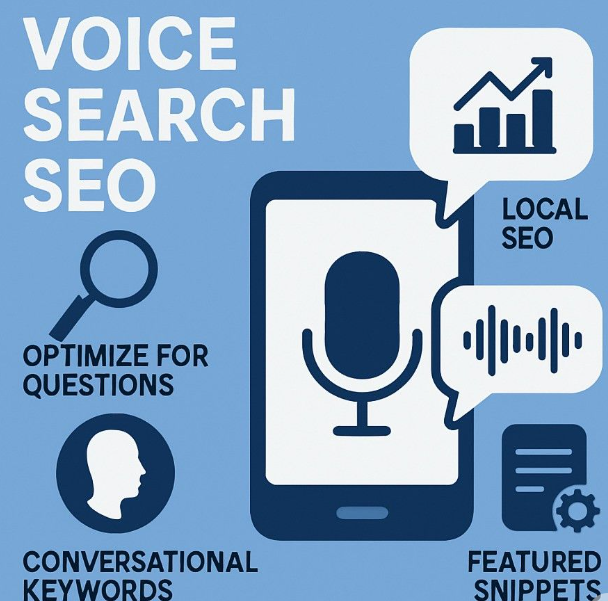
1. Focus on Conversational Keywords
Voice searches mimic how people speak.
Examples:
-
“What is the best SEO strategy for beginners?”
-
“How do I optimize my website for voice search?”
Tips:
-
Use natural language
-
Target long-tail keywords
-
Include question phrases
2. Optimize for Featured Snippets
Voice assistants often pull answers from featured snippets (Position Zero).
How to Optimize:
-
Answer questions directly
-
Keep answers concise (40–60 words)
-
Use bullet points and lists
-
Structure content with headings
3. Improve Local SEO
Voice searches are often location-based.
Optimize by:
-
Updating Google Business Profile
-
Adding local keywords
-
Ensuring NAP consistency
-
Collecting customer reviews
4. Create FAQ Pages
FAQ pages are highly effective for voice search.
Example:
Q: What is voice search SEO?
A: Voice search SEO is the process of optimizing content for voice-based queries using conversational keywords and structured data.
5. Optimize Website Speed
Fast-loading websites rank better in voice search.
Improve Speed:
-
Compress images
-
Use caching
-
Minimize code
-
Use CDN
6. Mobile Optimization
Ensure your website:
-
Is responsive
-
Loads quickly
-
Offers smooth navigation
7. Use Structured Data (Schema Markup)
Schema markup helps search engines understand your content better.
Benefits:
-
Improves visibility
-
Increases chances of voice results
-
Enhances rich snippets
8. Write in Natural Language
Avoid robotic content.
Focus on:
-
Simple sentences
-
Conversational tone
-
Clear answers
Advanced Voice Search SEO Techniques
1. Optimize for “Near Me” Searches
Examples:
-
“Best restaurant near me”
-
“SEO agency near me open now”
2. Target Long-Tail Keywords
Voice queries are longer and more specific.
Examples:
-
“Best digital marketing strategies for small businesses”
-
“How to rank website on Google using voice SEO”
3. Optimize for Zero-Click Searches
Voice search often provides answers without requiring clicks.
Strategy:
-
Provide direct answers
-
Structure content clearly
4. Build Domain Authority
High-authority websites are more likely to be selected by voice assistants.
Improve:
-
Backlinks
-
Content quality
-
User experience
5. Use AI and Analytics Tools
Track performance and optimize strategies using AI-powered tools.
Content Optimization for Voice Search
1. Use Question-Based Headings
Examples:
-
What is voice search SEO?
-
How does voice search work?
-
Why is voice SEO important?
2. Provide Clear Answers First
Start with a direct answer, then expand with details.
3. Use Structured Formatting
-
Bullet points
-
Lists
-
Short paragraphs
4. Improve Readability
-
Use simple language
-
Avoid jargon
Technical SEO for Voice Search
1. HTTPS Security
Secure websites rank higher.
2. Fast Loading Speed
Critical for both SEO and user experience.
3. Mobile-First Indexing
Google prioritizes mobile-friendly websites.
4. Crawlability and Indexing
Ensure search engines can access your site.
Voice Search SEO Tools
1. Keyword Research Tools
Find voice-friendly keywords.
2. SEO Analytics Tools
Track rankings and performance.
3. Schema Markup Tools
Implement structured data easily.
4. AI Content Tools
Generate optimized content.
Common Mistakes to Avoid
-
Ignoring conversational keywords
-
Not optimizing for mobile
-
Slow website speed
-
Lack of structured data
-
Keyword stuffing
-
Ignoring local SEO
Voice Search SEO Trends in 2026
1. AI-Powered Search Results
Search engines are becoming more intelligent.
2. Increased Voice Adoption
More users rely on voice assistants daily.
3. Multilingual Voice Search
Voice search is expanding globally.
4. Personalized Search Experience
AI delivers tailored results.
Voice Search SEO Checklist
✔ Use conversational keywords
✔ Optimize for featured snippets
✔ Improve page speed
✔ Focus on mobile optimization
✔ Add structured data
✔ Create FAQ pages
✔ Optimize for local SEO
✔ Use natural language
Real-Life Example
Traditional SEO:
“Best SEO services Delhi”
Voice SEO:
“Which are the best SEO services in Delhi near me?”
This shows how voice search changes keyword strategy.
Future of Voice Search SEO
Voice search will continue to evolve with:
-
Better AI understanding
-
More accurate results
-
Increased adoption of smart devices
-
Integration with digital ecosystems
Businesses that adapt early will gain a competitive advantage.
Conclusion
Optimizing for voice search SEO is one of the most important digital marketing strategies in 2026. As users shift toward voice-based interactions, businesses must align their SEO efforts with conversational search behavior.
By focusing on long-tail keywords, improving technical SEO, creating high-quality content, and leveraging AI tools, you can dominate voice search rankings and drive meaningful results.
The future belongs to brands that understand how people speak—not just how they type.