Table of Contents
ToggleBest Sales Funnel Strategies to Boost Conversions and Revenue
In the ever-evolving world of business, attracting potential customers is just the beginning. The real challenge lies in converting those prospects into paying customers and eventually loyal brand advocates. This is where sales funnel strategies come into play.
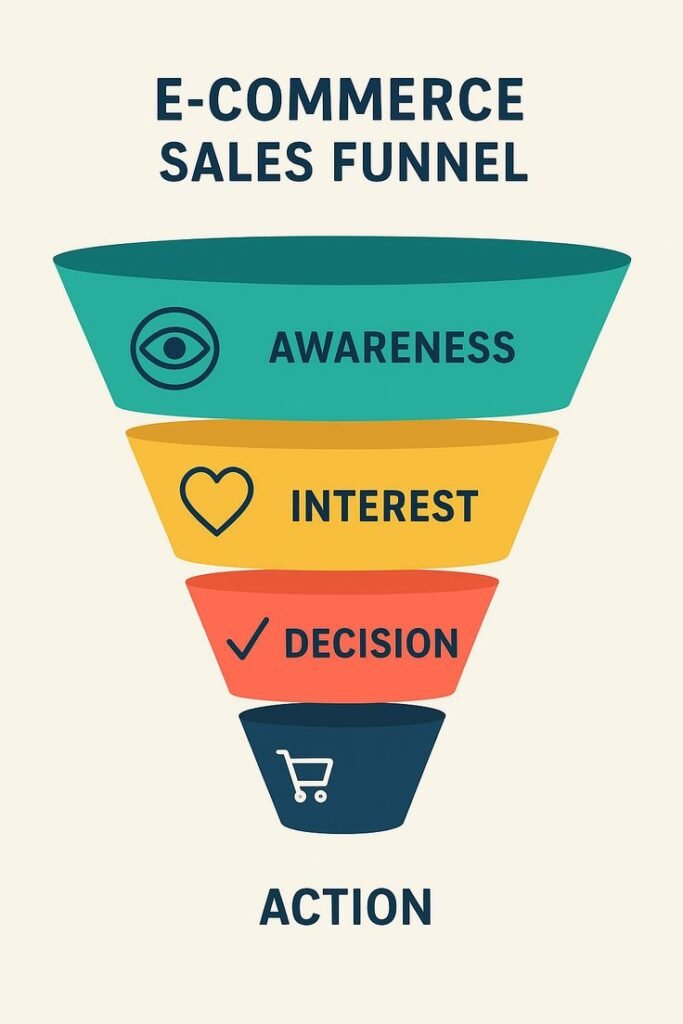
A sales funnel is a systematic journey that guides prospects from awareness to action, ensuring that each step of the customer journey is optimized for maximum conversion. A well-planned funnel allows businesses to nurture leads, improve customer experience, and ultimately increase revenue.
This blog explores the best sales funnel strategies, offering practical insights and actionable tips for marketers, entrepreneurs, and business owners.
Table of Contents
Understanding Sales Funnels
Importance of Sales Funnel Strategies
Stages of a Sales Funnel
Awareness
Interest
Decision
Action
Retention
Best Sales Funnel Strategies
Content Marketing
Email Marketing
Social Media Funnel
Paid Advertising Funnel
Personalized Customer Journeys
Advanced Funnel Optimization Techniques
Tools for Managing Your Sales Funnel
Measuring Funnel Performance
Common Mistakes to Avoid
Conclusion
1. Understanding Sales Funnels
A sales funnel represents the process through which a prospect becomes a customer. The funnel metaphor illustrates the narrowing journey—many prospects enter at the top, but only a fraction make it to the final stage of purchase.
Key Benefits of a Sales Funnel:
Predictable revenue: Understanding each stage helps forecast sales.
Targeted marketing: Businesses can tailor messages for specific stages.
Customer insights: Funnels provide data on customer behavior and preferences.
Optimized conversion: Identifying bottlenecks allows better lead nurturing.
Without a sales funnel, marketing and sales efforts can become disorganized, leading to lost opportunities and wasted resources.
2. Importance of Sales Funnel Strategies
Implementing an effective sales funnel strategy is crucial for:
Increasing conversions: Tailored strategies guide prospects seamlessly through the buying journey.
Reducing customer acquisition cost (CAC): Efficient funnels reduce wasted marketing spend.
Enhancing customer experience: A structured journey keeps prospects engaged.
Building loyalty: Well-nurtured customers are more likely to return and refer others.
Businesses that master their funnels often see higher ROI and sustainable growth.
3. Stages of a Sales Funnel
Understanding the stages of a funnel is critical for developing strategies that work.
a) Awareness Stage
This is the top of the funnel (TOFU), where potential customers first learn about your brand.
Objectives:
Generate visibility
Attract broad audiences
Educate prospects about problems your product solves
Tactics:
SEO-optimized blog posts
Social media content
Paid ads targeting cold audiences
Example: A fitness brand shares “10 Easy Home Workouts” to attract health-conscious individuals.
Tips:
Focus on educational and informative content
Leverage social media channels to increase reach
Use paid campaigns to target new prospects
b) Interest Stage
At this stage, prospects show curiosity and want to learn more about your offerings.
Objectives:
Build trust
Engage prospects with helpful content
Capture leads for further nurturing
Tactics:
Email newsletters
Free eBooks or guides
Webinars and tutorials
Example: Offer a free eBook titled “Top 5 Strategies to Stay Fit at Home” in exchange for email addresses.
Tips:
Segment audiences to provide relevant content
Use retargeting to re-engage visitors
Provide actionable, high-value content
c) Decision Stage
Here, prospects are evaluating your solution against competitors.
Objectives:
Show product value
Address concerns and objections
Encourage purchase
Tactics:
Product demos
Case studies and testimonials
Limited-time offers
Example: A software company sends emails highlighting customer success stories and offering a 14-day free trial.
Tips:
Emphasize benefits over features
Use social proof to build credibility
Offer incentives for faster decision-making
d) Action Stage
The action stage is where the prospect converts into a customer.
Objectives:
Simplify the purchase process
Reduce friction
Encourage repeat actions
Tactics:
Optimized landing pages with clear CTAs
Multiple payment options
Onboarding emails and guides
Example: Include a one-click checkout option for eCommerce products to reduce abandoned carts.
Tips:
Ensure the checkout process is quick and seamless
Offer guarantees or satisfaction policies
Follow up immediately after purchase
e) Retention Stage
Retention ensures long-term profitability through repeat purchases and loyalty.
Objectives:
Build customer loyalty
Encourage repeat purchases
Turn customers into advocates
Tactics:
Loyalty programs and referral incentives
Personalized follow-up emails
Upselling and cross-selling offers
Example: Amazon uses recommendations and loyalty programs to drive repeat purchases.
Tips:
Segment customers based on purchase history
Engage consistently through email, social media, or SMS
Ask for reviews and feedback
4. Best Sales Funnel Strategies
Here are some of the most effective sales funnel strategies for businesses today.
a) Content Marketing Funnel
Content drives awareness, nurtures leads, and closes sales.
Strategies:
TOFU: Blog posts, videos, infographics
MOFU: Guides, webinars, free resources
BOFU: Case studies, testimonials, product demos
Tips:
Optimize content for SEO to attract organic traffic
Repurpose content across multiple platforms
Focus on delivering value at each stage
b) Email Marketing Funnel
Email marketing is highly effective for nurturing leads.
Strategies:
Segment lists based on user behavior
Automated drip campaigns for onboarding and nurturing
Personalized offers and reminders
Tips:
Include dynamic content in emails
Send emails triggered by user actions
Track open rates, click-through rates, and conversions
c) Social Media Funnel
Social platforms help in awareness and engagement.
Strategies:
Organic posts for brand building
Paid campaigns for targeted reach
Retargeting ads to recover lost leads
Tips:
Use storytelling and engaging visuals
Collaborate with influencers for wider reach
Use analytics to refine social campaigns
d) Paid Advertising Funnel
Paid ads can accelerate the funnel by targeting high-intent audiences.
Strategies:
Google Ads for search intent
Facebook and Instagram Ads for targeting specific demographics
Retargeting campaigns for abandoned carts or website visitors
Tips:
Optimize ad creatives for each funnel stage
A/B test messaging and visuals
Track ROI and conversions
e) Personalized Customer Journeys
Personalization improves engagement and conversion.
Strategies:
Segment audiences based on behavior and demographics
Customize landing pages and email campaigns
Recommend products based on past interactions
Example: Spotify recommends playlists based on listening behavior to keep users engaged.
5. Advanced Funnel Optimization Techniques
A/B Testing: Test headlines, CTAs, visuals, and landing pages.
Lead Scoring: Identify high-potential leads based on engagement.
Behavioral Analytics: Track actions and optimize for user intent.
Retargeting: Serve personalized ads to prospects who didn’t convert initially.
6. Tools for Managing Your Sales Funnel
CRM: HubSpot, Salesforce, Zoho CRM
Email Marketing: Mailchimp, ActiveCampaign, Klaviyo
Landing Page Builders: ClickFunnels, Leadpages, Unbounce
Analytics: Google Analytics, Mixpanel, Hotjar
Automation: Zapier, HubSpot Workflows
Using these tools can help automate tasks, track funnel performance, and optimize every stage efficiently.
7. Measuring Funnel Performance
Monitor the following metrics to gauge funnel effectiveness:
Conversion Rate: Percentage of prospects moving to the next stage
Customer Acquisition Cost (CAC): Cost to acquire one customer
Customer Lifetime Value (CLV): Total revenue from a customer over time
Drop-off Rate: Identify where prospects leave the funnel
Engagement Metrics: Open rates, CTRs, website engagement
Regular measurement allows you to spot bottlenecks and optimize continuously.
8. Common Mistakes to Avoid
Neglecting segmentation and personalization
Focusing only on acquisition, not retention
Overcomplicating the funnel
Poor mobile optimization
Avoiding these mistakes ensures smoother conversions and higher revenue.
9. Conclusion
A well-optimized sales funnel is essential for sustainable business growth. By understanding each stage, implementing strategic tactics, and continuously optimizing based on data, businesses can convert prospects into loyal customers efficiently.
Key Takeaways:
Structure your funnel for clear stages: Awareness → Interest → Decision → Action → Retention
Use content, email, social media, and paid advertising to nurture leads
Personalize interactions for better engagement and conversions
Monitor metrics and optimize continuously for maximum ROI