Table of Contents
ToggleBest Website Copywriting Tips: The Complete 3000-Word Guide to Writing Copy That Converts
Your website is your 24/7 salesperson. It never sleeps, never takes a break, and never misses a pitch. But here’s the truth:
If your copy doesn’t connect, clarify, and convert — your traffic is wasted.
Great website copy isn’t about sounding clever. It’s about being clear, persuasive, and strategically structured.
In this complete guide, you’ll learn:
-
What website copywriting really means
-
The psychology behind high-converting websites
-
Page-by-page copywriting tips
-
Proven frameworks professionals use
-
SEO + conversion balance
-
Mistakes to avoid
-
Advanced optimization strategies
Let’s build website copy that sells.
What Is Website Copywriting?
Website copywriting is the strategic writing of content designed to:
-
Capture attention
-
Communicate value
-
Build trust
-
Drive action
Unlike blog writing, website copy focuses on conversion — whether that means buying, booking, subscribing, or contacting.
Why Website Copy Matters More Than Design
A beautiful website with weak copy fails.
Strong copy can outperform beautiful design.
Studies and experiments by companies like HubSpot show that messaging clarity directly impacts conversion rates.
Design attracts.
Copy persuades.
The Psychology Behind High-Converting Copy
Before writing, understand what makes people act.
Great copy taps into:
1. Clarity
If visitors don’t understand what you offer in 5 seconds, they leave.
2. Relevance
Your message must match their intent.
3. Emotion
People buy based on emotion and justify with logic.
4. Trust
Testimonials, proof, and authority reduce risk.
5. Simplicity
Short sentences. Clear words. Easy structure.
The Golden Rule of Website Copy
It’s not about you.
It’s about your customer.
Instead of:
“We provide innovative digital marketing solutions.”
Write:
“Get more qualified leads without increasing your ad budget.”
Focus on outcomes, not features.
Step-by-Step Website Copywriting Strategy
Step 1: Know Your Audience Deeply
Answer:
-
What are their biggest frustrations?
-
What results do they want?
-
What objections do they have?
-
What alternatives are they considering?
Use surveys, reviews, competitor analysis, and customer interviews.
The better you understand them, the easier writing becomes.
Homepage Copywriting Tips
Your homepage has one job: guide visitors to the next step.
1. Clear Headline
Your headline must answer:
“What do you do and who is it for?”
Formula:
Result + Target Audience + Differentiator
Example:
“Affordable Digital Marketing for Small Businesses That Want Real ROI”
Avoid vague headlines like:
“Welcome to Our Website.”
2. Strong Subheadline
Expand on the promise.
Example:
“We help local businesses increase leads by 40% using SEO and paid ads — without long-term contracts.”
3. Primary Call-to-Action (CTA)
Examples:
-
Book a Free Consultation
-
Get a Quote
-
Start Free Trial
Make it clear and benefit-driven.
4. Benefits Section
Use bullet points.
Instead of:
“Advanced Analytics Dashboard”
Write:
“Track every lead and see exactly where your marketing money goes.”
Benefits > Features.
5. Social Proof
Add:
-
Testimonials
-
Reviews
-
Client logos
-
Case studies
This builds instant trust.
About Page Copywriting Tips
The About page is not your biography.
It should:
-
Build connection
-
Show credibility
-
Reinforce benefits
Structure:
-
Relatable introduction
-
Your mission
-
Your story (brief)
-
Proof of expertise
-
CTA
Human stories convert better than corporate language.
Service Page Copywriting Framework
Each service page should follow this structure:
1. Problem Statement
Show you understand their struggle.
Example:
“Struggling to rank on Google while competitors dominate search results?”
2. Agitate the Problem
Explain consequences of inaction.
3. Present the Solution
Introduce your service.
4. Explain the Process
Break into 3–5 steps.
Clarity builds confidence.
5. Benefits & Results
Use real numbers when possible.
6. FAQs
Address objections:
-
How long does it take?
-
What’s included?
-
Is there a contract?
7. CTA
Clear and visible.
Product Page Copywriting Tips
If you run ecommerce, this is critical.
High-converting product copy includes:
-
Clear product name
-
Problem-solving headline
-
Benefit-driven bullet points
-
Specifications
-
Social proof
-
Urgency (limited stock, offer ends)
-
Risk reduction (returns, guarantee)
Writing High-Converting Headlines
Headlines are everything.
Proven formulas:
1. How-To
“How to Generate 100 Leads a Month”
2. Benefit-Driven
“Double Your Sales Without Doubling Your Budget”
3. Question-Based
“Ready to Finally Rank #1 on Google?”
4. Number-Based
“7 Proven Ways to Improve Your Website Conversion Rate”
Test multiple versions.
The AIDA Copywriting Framework
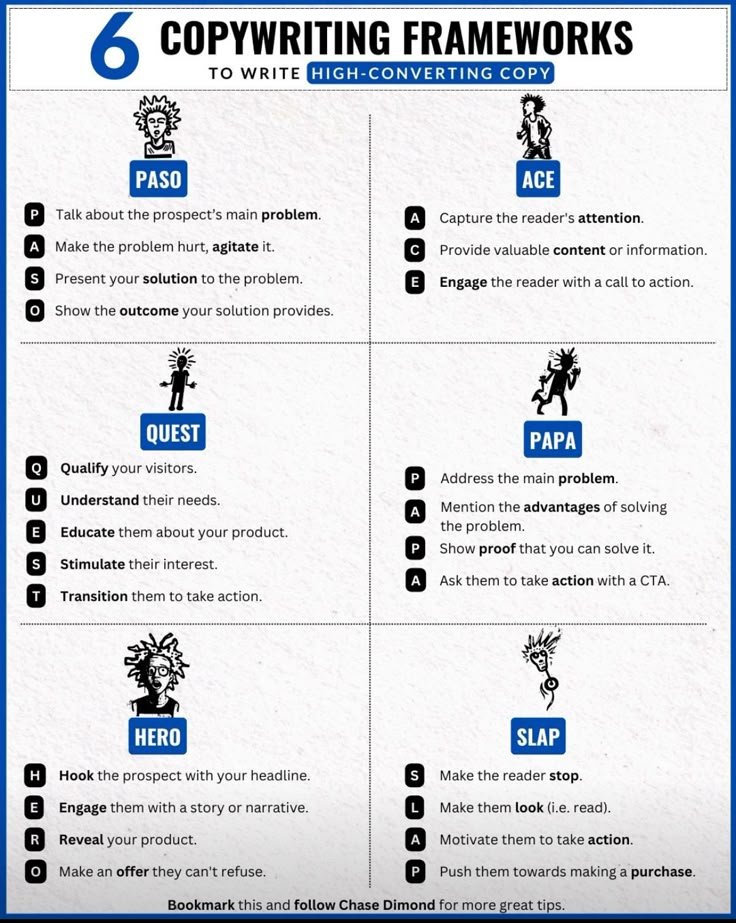
AIDA stands for:
Attention
Interest
Desire
Action
Structure your copy like this:
-
Grab attention
-
Build interest
-
Create desire
-
Ask for action
This framework is timeless and works across industries.
SEO + Copywriting: How to Balance Both
Good website copy ranks AND converts.
1. Use Primary Keyword Naturally
Place in:
-
Headline
-
First 100 words
-
Subheadings
-
Meta description
Avoid keyword stuffing.
Search engines like Google prioritize user experience.
2. Write for Humans First
If it sounds robotic, rewrite it.
3. Optimize for Intent
Informational intent = educational content
Transactional intent = persuasive copy
Match your content to user intent.
Microcopy Matters More Than You Think
Microcopy includes:
-
Button text
-
Error messages
-
Form instructions
-
Tooltips
Instead of:
“Submit”
Use:
“Get My Free Strategy”
Small changes can increase conversions significantly.
Power Words That Increase Conversions
Use words that trigger emotion:
-
Proven
-
Guaranteed
-
Instant
-
Free
-
Easy
-
Exclusive
-
Limited
-
New
-
Secure
-
Simple
But don’t overuse them.
Writing Clear Calls-to-Action
Weak CTA:
“Learn More”
Strong CTA:
“Schedule Your Free 15-Minute Growth Call”
Make it:
-
Specific
-
Action-oriented
-
Benefit-driven
Common Website Copywriting Mistakes
Avoid these:
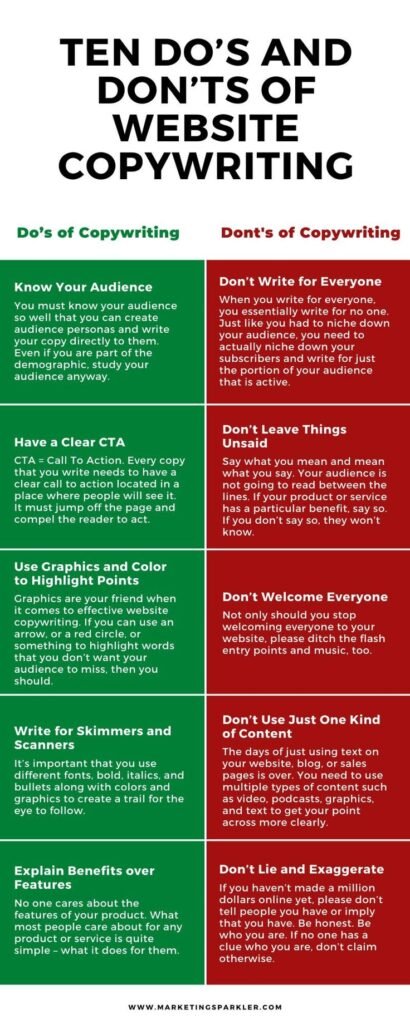
❌ Being too vague
❌ Talking about yourself too much
❌ No clear CTA
❌ Long paragraphs
❌ Jargon overload
❌ No social proof
❌ Overpromising
Clarity wins over creativity.
Advanced Copywriting Techniques
1. Use Storytelling
Stories increase engagement and memorability.
2. Add Data & Statistics
Numbers build credibility.
3. Use Comparison
Show why you’re better than alternatives.
4. Add Guarantees
Money-back guarantee reduces risk.
5. Use FAQs Strategically
Turn objections into reassurance.
Formatting Tips for Better Readability
Online readers scan.
So:
-
Use short paragraphs
-
Add bullet points
-
Use subheadings
-
Highlight key phrases
-
Add white space
Easy reading = longer engagement.
Conversion Optimization Through Testing
Never assume your first draft is perfect.
A/B test:
-
Headlines
-
CTAs
-
Page structure
-
Hero images
-
Testimonials placement
Continuous testing improves results over time.
Website Copy Checklist
Before publishing, ask:
-
Is the value clear in 5 seconds?
-
Does every section lead toward a CTA?
-
Are benefits stronger than features?
-
Is it written in simple language?
-
Does it address objections?
-
Is SEO optimized?
-
Does it build trust?
If yes, you’re ready.
Example Homepage Structure
-
Headline
-
Subheadline
-
CTA
-
Benefits
-
Social proof
-
How it works
-
Testimonials
-
FAQs
-
Final CTA
Keep it focused.
Final Thoughts
Website copywriting is not about fancy words.
It’s about:
Clarity
Relevance
Trust
Emotion
Action
When done right, your website becomes your best salesperson.
Remember:
Traffic without conversion is expensive.
Great copy turns visitors into customers.