Table of Contents
ToggleThe Ultimate Guide to Website Ranking Tips in 2026: 3000-Word Complete SEO Blueprint
Ranking a website in 2026 is no longer about stuffing keywords or building random backlinks. Search engines have evolved. Algorithms are smarter, competition is tougher, and user expectations are higher.
If you want your website to rank consistently on page one, you need a strategic, data-driven, and technically sound approach.
In this comprehensive 3000-word guide, you will learn:
-
How search engines rank websites
-
Proven website ranking strategies
-
On-page SEO best practices
-
Technical SEO optimization
-
Content strategies that dominate SERPs
-
Link-building tactics that work in 2026
-
Advanced ranking tips for competitive niches
Let’s dive in.
How Search Engines Rank Websites
Search engines like Google use complex algorithms to determine rankings. These algorithms evaluate hundreds of ranking signals, including:
-
Relevance
-
Content quality
-
User experience
-
Backlinks
-
Page speed
-
Mobile friendliness
-
Authority
Understanding these ranking signals helps you align your website with what search engines want.
Core Pillars of Website Ranking
To rank successfully, focus on five core pillars:
-
Keyword Strategy
-
High-Quality Content
-
Technical SEO
-
Backlink Authority
-
User Experience Optimization
Let’s break each one down in detail.
1. Smart Keyword Research Strategy
Keyword research is the foundation of ranking.
Target Search Intent
There are four main types of search intent:
-
Informational
-
Navigational
-
Transactional
-
Commercial
Always match your content to user intent.
Focus on Long-Tail Keywords
Instead of targeting:
“SEO”
Target:
“best SEO strategy for ecommerce websites”
Long-tail keywords have:
-
Lower competition
-
Higher conversion rates
-
Easier ranking potential
Use Keyword Tools
You can use:
-
Google Keyword Planner
-
Ahrefs
-
SEMrush
These tools help you analyze:
-
Search volume
-
Keyword difficulty
-
Competition
-
Related terms
2. Create High-Quality, SEO-Optimized Content
Content remains king — but only when done correctly.
Follow the E-E-A-T Framework
Google values:
-
Experience
-
Expertise
-
Authoritativeness
-
Trustworthiness
Show credibility by:
-
Adding author bios
-
Including data and case studies
-
Citing trusted sources
-
Updating content regularly
Optimize On-Page Elements
Title Tags
-
Include primary keyword
-
Keep under 60 characters
-
Make it compelling
Meta Descriptions
-
150–160 characters
-
Include keyword naturally
-
Add call-to-action
Headings (H1–H6)
Use structured headings with keywords in H1 and H2.
Image Optimization
-
Compress images
-
Add descriptive ALT tags
-
Use modern formats like WebP
Write for Humans First
Avoid:
-
Keyword stuffing
-
Robotic writing
-
Thin content
Instead:
-
Answer real questions
-
Use simple language
-
Provide actionable insights
3. Technical SEO: The Ranking Backbone
Without technical SEO, your website cannot perform well.
Improve Site Speed
Use tools like:
-
Google PageSpeed Insights
Improve:
-
Server response time
-
Image size
-
CSS & JS minification
-
Caching
Faster websites rank better and convert more.
Ensure Mobile Optimization
Google uses mobile-first indexing.
Your website must:
-
Be responsive
-
Load fast on mobile
-
Have readable fonts
-
Avoid intrusive popups
Fix Crawl and Indexing Issues
Use:
-
Google Search Console
Check:
-
404 errors
-
5xx errors
-
Blocked pages
-
Duplicate content
Secure Your Website (HTTPS)
SSL certificates are ranking signals.
Always use HTTPS.
Structured Data & Schema Markup
Schema helps search engines understand your content.
Add:
-
FAQ schema
-
Review schema
-
Article schema
-
Product schema
This improves rich results visibility.
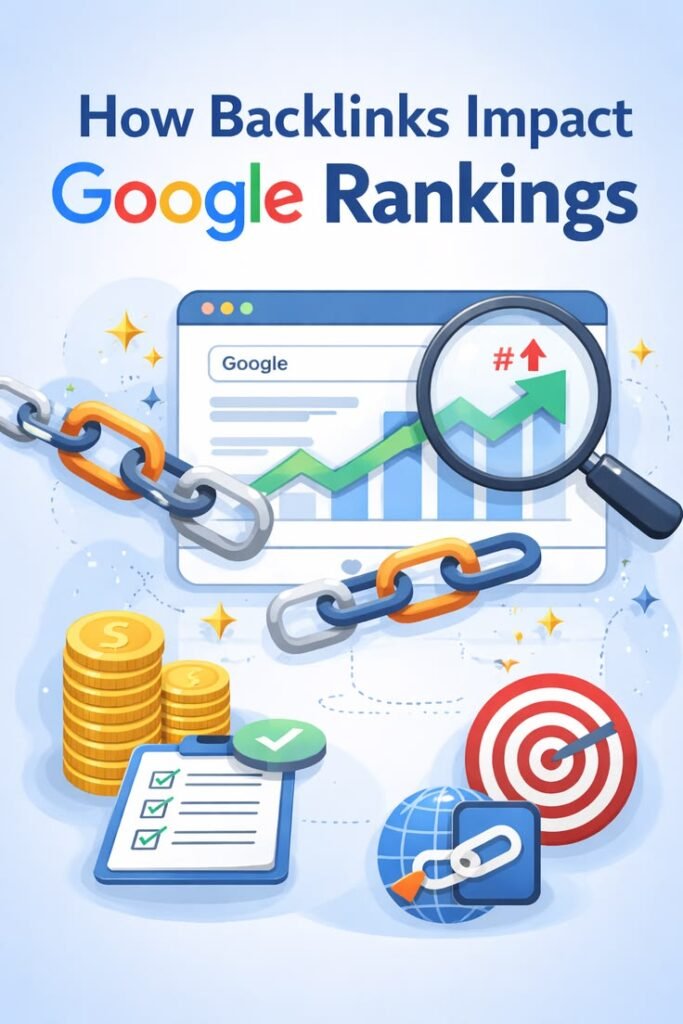
4. Build High-Quality Backlinks
Backlinks are still one of the strongest ranking factors.
But quality matters more than quantity.
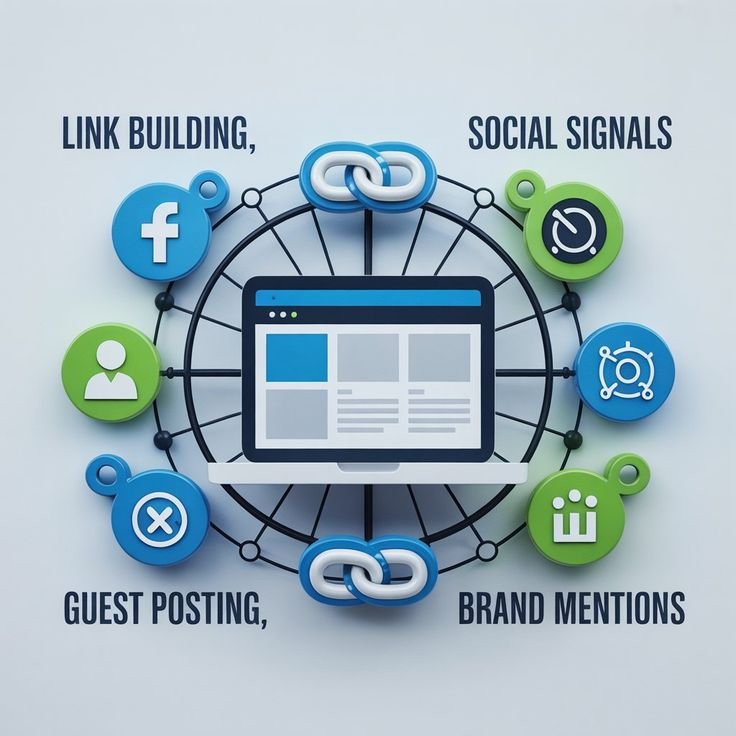
How to Build Powerful Links
Guest Posting
Publish on authoritative websites in your niche.
Digital PR
Create:
-
Original research
-
Infographics
-
Case studies
-
Data-driven reports
Broken Link Building
Find broken links on authority sites and suggest your content as replacement.
Skyscraper Technique
Create better content than competitors and reach out to websites linking to them.
Avoid Black Hat SEO
Never:
-
Buy spammy links
-
Use private blog networks
-
Automate link spam
Google penalizes manipulative practices.
5. Optimize User Experience (UX)
Search engines track user signals:
-
Bounce rate
-
Time on page
-
Click-through rate
-
Engagement
Better UX = Higher rankings.
Improve Engagement
-
Use short paragraphs
-
Add visuals
-
Include videos
-
Add internal links
-
Use bullet points
Internal Linking Strategy
Internal links:
-
Distribute authority
-
Improve crawlability
-
Reduce bounce rate
Best practices:
-
Use keyword-rich anchor text
-
Link to relevant pages
-
Keep structure shallow (3 clicks max)
Content Clustering Strategy
Top-ranking websites use topic clusters.
Example:
Main Page:
“Complete SEO Guide”
Supporting Pages:
-
Keyword research guide
-
Link-building guide
-
Technical SEO checklist
Link them together to build topical authority.
Optimize for Featured Snippets
To capture position zero:
-
Answer questions directly
-
Use bullet lists
-
Add tables
-
Use concise paragraphs (40–60 words)
Voice Search Optimization
With AI assistants growing, optimize for conversational queries:
Instead of:
best seo tools
Target:
what are the best SEO tools for beginners?
Local SEO Ranking Tips
If you serve a local area:
-
Create Google Business Profile
-
Add local keywords
-
Get local backlinks
-
Collect reviews
Local SEO drives high-intent traffic.
Content Update Strategy
Google prefers fresh content.
Update:
-
Statistics
-
Examples
-
Screenshots
-
Internal links
Refresh top-performing pages every 6–12 months.
Advanced Ranking Tips for Competitive Niches
If you are in a high-competition industry:
1. Target Low-Competition Clusters
Build authority around smaller subtopics first.
2. Publish 10x Content
Make content:
-
More detailed
-
Better designed
-
More actionable
3. Improve Click-Through Rate (CTR)
-
Use numbers in titles
-
Add brackets
Example:
“15 Proven SEO Hacks [2026 Guide]”
Website Architecture Optimization
Your site structure should be:
Homepage
→ Categories
→ Subcategories
→ Articles
Keep URLs clean:
Good:
example.com/seo/keyword-research
Bad:
example.com/p=123?id=45
Analytics and Tracking
Monitor performance using:
-
Google Analytics
-
Google Search Console
Track:
-
Organic traffic
-
Keyword rankings
-
Bounce rate
-
Conversion rate
Data-driven SEO always wins.
AI and SEO in 2026
AI tools help with:
-
Content outlines
-
Keyword clustering
-
SERP analysis
-
Competitor research
But always human-edit content for authenticity and trust.
Common Ranking Mistakes to Avoid
-
Ignoring technical SEO
-
Publishing thin content
-
Not building backlinks
-
Slow website speed
-
Poor mobile experience
-
Duplicate content
-
No internal linking
Avoiding mistakes is as important as implementing strategies.
Website Ranking Checklist
Here’s a simple actionable checklist:
✔ Keyword research done
✔ Search intent matched
✔ Optimized title & meta
✔ Fast loading speed
✔ Mobile friendly
✔ SSL installed
✔ Internal linking structured
✔ Backlinks acquired
✔ Schema markup added
✔ Content updated regularly
Final Thoughts
Ranking a website in 2026 requires a complete ecosystem approach.
You cannot rely on just:
-
Keywords
-
Backlinks
-
Content
You must integrate:
Technical SEO + Quality Content + Authority + User Experience
Search engines reward websites that provide value, clarity, and trust.
If you consistently:
-
Publish helpful content
-
Fix technical issues
-
Build authority
Your rankings will improve sustainably.