Table of Contents
ToggleBest Digital Marketing Framework: A Complete Guide for Business Growth
Introduction
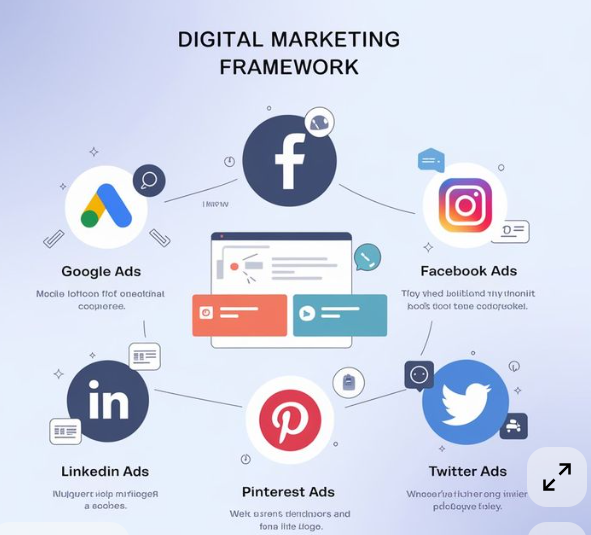
In today’s highly competitive online world, businesses must adopt a structured digital marketing framework to achieve consistent growth and measurable results. Digital marketing is no longer limited to social media posts or running ads; it requires a well-planned strategy that integrates SEO, content marketing, social media, email marketing, paid advertising, analytics, and customer relationship management.
A digital marketing framework acts as a blueprint for planning, executing, and optimizing marketing activities. It helps marketers understand customer behavior, align marketing goals with business objectives, and deliver the right message to the right audience at the right time.
This guide explains the best digital marketing framework, its components, benefits, implementation steps, and best practices to help businesses scale their marketing success.
What is a Digital Marketing Framework?
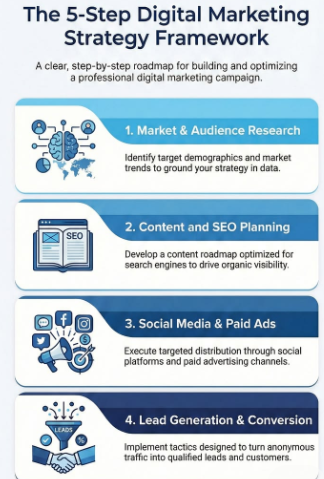
A digital marketing framework is a structured system that guides businesses in planning, executing, measuring, and optimizing their digital marketing strategies. It organizes marketing activities into logical stages so companies can create effective campaigns and improve ROI.
Instead of random marketing efforts, the framework ensures:
-
Clear marketing goals
-
Organized marketing channels
-
Consistent messaging
-
Data-driven decision making
-
Better customer engagement
Digital marketing frameworks are widely used by startups, agencies, and large enterprises to build scalable and predictable marketing strategies.
Why Businesses Need a Digital Marketing Framework
1. Strategic Direction
A framework provides a clear roadmap for digital marketing campaigns.
2. Better Customer Understanding
It helps businesses identify target audiences and customer needs.
3. Improved Marketing Efficiency
Teams can organize their efforts and avoid wasted marketing resources.
4. Measurable Results
Frameworks include metrics and analytics that track campaign performance.
5. Consistent Brand Messaging
Marketing across platforms remains aligned with brand identity.
Core Elements of a Digital Marketing Framework
A successful digital marketing framework usually consists of the following key elements.
1. Market Research
Market research helps businesses understand:
-
Customer demographics
-
Market trends
-
Competitor strategies
-
Consumer behavior
Tools for market research include:
-
Keyword research tools
-
Customer surveys
-
competitor analysis
-
industry reports
Understanding the market helps marketers create targeted strategies.
2. Target Audience Definition
Identifying the right audience ensures marketing campaigns reach the people most likely to convert.
Important factors include:
-
Age
-
Gender
-
Location
-
Interests
-
Buying behavior
-
Income level
Businesses often create buyer personas to represent their ideal customers.
3. Marketing Goal Setting
Every digital marketing strategy should begin with clear goals such as:
-
Increasing website traffic
-
Generating leads
-
Improving brand awareness
-
Increasing online sales
-
Growing social media followers
Most companies use the SMART goal framework:
-
Specific
-
Measurable
-
Achievable
-
Relevant
-
Time-bound
The Best Digital Marketing Framework: RACE Model
One of the most effective frameworks used by marketers is the RACE framework, which stands for:
-
Reach
-
Act
-
Convert
-
Engage
This framework focuses on the complete customer journey from awareness to loyalty.
Stage 1: Reach (Building Awareness)
The first stage focuses on attracting new audiences and introducing them to the brand.
Key strategies include:
SEO (Search Engine Optimization)
Optimizing websites for search engines helps businesses appear in search results when users search for relevant keywords.
Important SEO tactics include:
-
Keyword research
-
On-page SEO
-
technical SEO
-
link building
-
local SEO
Content Marketing
Content marketing helps businesses educate and attract potential customers through valuable content such as:
-
Blogs
-
videos
-
podcasts
-
infographics
-
guides
High-quality content improves organic visibility and builds trust.
Social Media Marketing
Platforms like Instagram, LinkedIn, Facebook, and YouTube allow businesses to reach large audiences through engaging content.
Social media helps with:
-
brand awareness
-
community building
-
customer interaction
Paid Advertising
Paid advertising helps brands reach new audiences quickly.
Examples include:
-
Search ads
-
display ads
-
social media ads
-
video ads
Paid campaigns can generate traffic immediately.
Stage 2: Act (Encouraging Interaction)
Once users discover the brand, the next step is encouraging them to interact with content or visit the website.
Strategies include:
Landing Pages
Landing pages are designed to capture user interest and encourage action.
Good landing pages include:
-
compelling headlines
-
strong call-to-action
-
clear benefits
-
simple forms
Lead Magnets
Lead magnets encourage visitors to share their contact information.
Examples include:
-
free ebooks
-
webinars
-
free trials
-
discount codes
Interactive Content
Interactive content increases engagement. Examples include:
-
quizzes
-
surveys
-
calculators
-
interactive videos
These tools improve user participation.
Stage 3: Convert (Turning Visitors into Customers)
The conversion stage focuses on converting leads into paying customers.
Effective conversion strategies include:
Email Marketing
Email marketing nurtures leads by delivering personalized content.
Common email campaigns include:
-
welcome emails
-
product recommendations
-
discount offers
-
abandoned cart reminders
Retargeting Ads
Retargeting ads show advertisements to users who previously visited the website but did not convert.
This technique improves conversion rates significantly.
Conversion Rate Optimization (CRO)
CRO improves website performance through:
-
A/B testing
-
improved call-to-action
-
simplified checkout process
-
better product descriptions
Stage 4: Engage (Building Customer Loyalty)
Customer engagement focuses on retaining customers and encouraging repeat purchases.
Retention strategies include:
Customer Experience Optimization
Providing a seamless user experience across websites, apps, and support channels improves customer satisfaction.
Loyalty Programs
Loyalty programs reward customers with points, discounts, or exclusive offers.
Personalized Marketing
Using customer data allows businesses to deliver personalized messages.
Examples include:
-
personalized product recommendations
-
custom email campaigns
-
targeted offers
Community Building
Brands can build communities through:
-
online groups
-
forums
-
social media communities
This strengthens long-term customer relationships.
Tools Used in Digital Marketing Frameworks
Digital marketing frameworks rely on various tools to automate and optimize campaigns.
SEO Tools
-
Keyword research tools
-
site audit tools
-
backlink analysis tools
Analytics Tools
Analytics tools help measure marketing performance.
Important metrics include:
-
traffic sources
-
conversion rates
-
bounce rate
-
session duration
Social Media Tools
These tools help schedule and manage social media posts.
Email Marketing Platforms
Email platforms automate campaigns and track engagement metrics.
Data and Analytics in Digital Marketing Framework
Data plays a crucial role in optimizing marketing strategies.
Key metrics include:
-
Customer acquisition cost
-
conversion rate
-
customer lifetime value
-
engagement rate
-
return on marketing investment
By analyzing data, businesses can identify high-performing campaigns and eliminate ineffective strategies.
How to Implement a Digital Marketing Framework
Step 1: Conduct Market Research
Understand your industry, competitors, and audience.
Step 2: Define Marketing Objectives
Align marketing goals with business growth objectives.
Step 3: Choose Marketing Channels
Select the most effective platforms such as:
-
SEO
-
social media
-
paid ads
-
email marketing
Step 4: Create Content Strategy
Develop a content calendar with blog posts, videos, and social media content.
Step 5: Launch Marketing Campaigns
Execute campaigns across selected marketing channels.
Step 6: Track Performance
Use analytics to monitor campaign success.
Step 7: Optimize Strategies
Improve campaigns based on data insights.
Best Practices for Digital Marketing Framework Success
Focus on Customer Experience
Customer experience is a major factor in marketing success.
Use Data-Driven Marketing
Decisions should be based on real data rather than assumptions.
Integrate Marketing Channels
Omnichannel marketing improves customer engagement.
Optimize for Mobile Users
Most internet traffic comes from mobile devices.
Continuously Test Campaigns
A/B testing helps identify the best marketing strategies.
Common Mistakes in Digital Marketing Framework Implementation
Businesses often make mistakes that reduce marketing effectiveness.
Lack of Clear Goals
Without clear goals, campaigns lack direction.
Ignoring Data
Not analyzing performance data leads to poor decision making.
Poor Audience Targeting
Marketing to the wrong audience wastes resources.
Inconsistent Branding
Inconsistent messaging weakens brand identity.
Future Trends in Digital Marketing Frameworks
Digital marketing frameworks continue to evolve with new technologies.
Key future trends include:
Artificial Intelligence Marketing
AI tools help automate campaigns and personalize customer experiences.
Voice Search Optimization
Voice search is becoming more common with smart devices.
Video-First Marketing
Video content dominates digital platforms.
Privacy-Focused Marketing
Data privacy regulations are changing marketing strategies.
Benefits of Using a Digital Marketing Framework
Businesses that use structured marketing frameworks experience several benefits:
-
better marketing ROI
-
improved customer targeting
-
higher conversion rates
-
consistent marketing strategies
-
scalable marketing growth
A well-designed framework allows companies to grow faster and compete effectively in the digital marketplace.
Conclusion
A digital marketing framework is essential for businesses that want to build scalable, measurable, and effective marketing strategies. Instead of random marketing activities, a framework provides a structured approach that aligns marketing goals with business objectives.
The Reach-Act-Convert-Engage (RACE) framework is one of the most effective models because it covers the entire customer journey—from attracting new audiences to building long-term customer relationships.
By combining SEO, content marketing, social media, paid advertising, email marketing, and analytics, businesses can create powerful marketing systems that drive consistent growth.