Table of Contents
ToggleThe Ultimate Guide to the Best Early-Stage Marketing Plan
Introduction
Launching a new business, startup, or product is exciting—but without a solid marketing plan, even the best ideas can struggle to gain traction. Early-stage marketing is all about building awareness, validating your idea, acquiring your first customers, and setting the foundation for long-term growth.
Unlike established businesses, early-stage companies often operate with limited budgets, small teams, and high uncertainty. This makes it even more important to have a focused, strategic, and data-driven marketing approach.
In this comprehensive guide, we will explore the best early-stage marketing plan, including strategies, frameworks, tools, and actionable steps to help you grow from zero to your first 1,000 customers and beyond.
What is an Early-Stage Marketing Plan?
An early-stage marketing plan is a structured approach to promoting a new business, product, or service during its initial growth phase.
Objectives:
- Validate product-market fit
- Build brand awareness
- Acquire early users
- Generate leads and sales
- Gather feedback for improvement
Why Early-Stage Marketing is Critical
1. Validates Your Idea
Marketing helps you test whether your product solves a real problem.
2. Builds Initial Traction
Attract your first users and customers.
3. Creates Brand Awareness
Introduce your brand to the market.
4. Generates Revenue
Drive early sales to sustain growth.
5. Provides Insights
Learn from customer behavior and feedback.
Key Principles of Early-Stage Marketing
- Focus on one core audience
- Start small and scale gradually
- Prioritize high-impact channels
- Test and iterate quickly
- Measure everything
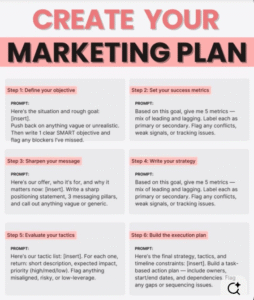
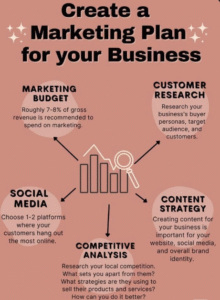
Step-by-Step Early-Stage Marketing Plan
Step 1: Define Your Target Audience
Identify your ideal customer.
Create a Customer Persona:
- Age, gender, location
- Interests and behavior
- Pain points
- Goals and motivations
Step 2: Identify Your Unique Value Proposition (UVP)
Answer:
- What problem do you solve?
- Why should customers choose you?
- What makes you different?
Your UVP should be clear and compelling.
Step 3: Conduct Market Research
Understand:
- Competitors
- Industry trends
- Customer needs
Tools:
- Surveys
- Interviews
- Online research
Step 4: Set Clear Goals
Examples:
- Acquire 500 users in 3 months
- Generate 100 leads per month
- Achieve first ₹1 lakh revenue
Use measurable KPIs.
Step 5: Build Your Online Presence
Essential Assets:
- Website
- Landing pages
- Social media profiles
Your digital presence is your foundation.
Step 6: Choose the Right Marketing Channels
High-Impact Channels for Early Stage:
1. Social Media Marketing
Build awareness and engagement.
2. Content Marketing
Attract organic traffic.
3. Email Marketing
Nurture leads and build relationships.
4. Paid Advertising
Drive quick traffic and conversions.
5. Influencer Marketing
Leverage existing audiences.
Step 7: Create a Content Strategy
Content Types:
- Blog posts
- Videos
- Social media content
- Infographics
Focus on solving problems and providing value.
Step 8: Launch Campaigns
Start with small campaigns:
- Test different strategies
- Analyze results
- Optimize performance
Step 9: Track Performance
Key Metrics:
- Traffic
- Engagement
- Conversion rate
- Customer acquisition cost
Step 10: Optimize and Scale
Focus on what works and scale it.
Best Early-Stage Marketing Strategies
1. Growth Hacking
Use creative, low-cost tactics to grow quickly.
2. Product-Led Growth
Let your product drive acquisition.
3. Community Building
Create a loyal audience around your brand.
4. Referral Marketing
Encourage users to refer others.
5. Influencer Marketing
Collaborate with niche influencers.
6. SEO Strategy
Focus on long-tail keywords.
7. Paid Ads Testing
Run small-budget campaigns.
Budget Allocation for Early-Stage Marketing
Example Budget Split:
| Channel | Budget % |
|---|---|
| Paid Ads | 30% |
| Content Marketing | 25% |
| Social Media | 20% |
| Tools & Software | 15% |
| Miscellaneous | 10% |
Tools for Early-Stage Marketing
Website & Landing Pages:
- WordPress
- Webflow
Marketing Tools:
- Mailchimp
- HubSpot
Analytics:
- Google Analytics
- Hotjar
Common Mistakes to Avoid
- Targeting too broad an audience
- Spending too much on ads early
- Ignoring data
- Lack of consistency
- Not testing strategies
Early-Stage Marketing Trends
1. AI-Powered Marketing
Automation improves efficiency.
2. Video Content
Short videos dominate engagement.
3. Personalization
Tailored experiences increase conversions.
4. Community-Led Growth
Building communities drives loyalty.
5. Micro-Influencers
Smaller influencers deliver better ROI.
Sample 90-Day Early-Stage Marketing Plan
Month 1:
- Market research
- Audience definition
- Website setup
Month 2:
- Content creation
- Launch campaigns
- Start email marketing
Month 3:
- Analyze performance
- Optimize campaigns
- Scale successful strategies
Measuring Success
Key Indicators:
- User growth
- Engagement rate
- Conversion rate
- Revenue
Scaling Your Marketing
1. Increase Budget
Invest in high-performing channels.
2. Expand Channels
Test new platforms.
3. Improve Conversion Rates
Optimize landing pages.
4. Build Brand
Strengthen your identity.
Conclusion
An effective early-stage marketing plan is essential for building a strong foundation and achieving sustainable growth. By focusing on your audience, testing strategies, and optimizing based on data, you can successfully grow your business from the ground up.
Final Thoughts
Early-stage marketing is all about experimentation, learning, and adaptation. There is no one-size-fits-all approach—what works for one business may not work for another.
Stay flexible, focus on delivering value, and continuously improve your strategy.
Start implementing your early-stage marketing plan today and take the first step toward building a successful and scalable business.
Remember, every successful brand started with a single step—and a smart marketing plan.