Table of Contents
ToggleBest Digital Marketing KPI Tracking: The Complete Guide to Measuring Marketing Performance (3000 Words)
Digital marketing has become a data-driven industry where success depends on analyzing performance and optimizing strategies based on measurable results. Businesses invest heavily in online marketing campaigns, but without tracking the right metrics, it becomes difficult to evaluate whether those campaigns are delivering value.
This is where Digital Marketing KPI tracking becomes essential. KPIs, or Key Performance Indicators, help marketers measure the effectiveness of their marketing efforts and determine whether their strategies are achieving business goals.
Leading platforms such as Google, Meta Platforms, and Microsoft provide powerful analytics and advertising tools that help businesses track marketing KPIs and improve campaign performance.
In this comprehensive guide, you will learn everything about digital marketing KPI tracking, including important metrics, tracking tools, strategies, and best practices.
What Are Digital Marketing KPIs?
Digital marketing KPIs are measurable metrics that evaluate the performance of marketing campaigns and strategies.
KPIs help businesses understand:
-
How well their marketing campaigns are performing
-
Whether marketing goals are being achieved
-
Which strategies generate the best results
-
Where improvements are needed
KPIs allow marketers to make informed decisions based on data rather than assumptions.
Why KPI Tracking Is Important in Digital Marketing
Tracking KPIs is essential for successful marketing strategies.
1. Measures Marketing Effectiveness
KPIs provide measurable data that shows whether marketing campaigns are delivering expected results.
Without KPI tracking, it becomes difficult to determine campaign success.
2. Improves Decision Making
Data-driven insights help marketers adjust strategies and allocate budgets more effectively.
For example, if one campaign generates more conversions than another, marketers can invest more resources into the successful campaign.
3. Optimizes Marketing Budget
Tracking performance metrics helps businesses identify which marketing channels deliver the highest return on investment.
Platforms such as Google Ads allow marketers to analyze advertising performance and adjust budgets accordingly.
4. Identifies Growth Opportunities
KPI analysis helps identify new opportunities for improving traffic, engagement, and conversions.
Businesses can experiment with different strategies based on data insights.
Types of Digital Marketing KPIs
Digital marketing KPIs can be categorized into several groups depending on marketing objectives.
Traffic KPIs
Traffic KPIs measure how many people visit your website or digital platforms.
Important traffic metrics include:
Website Traffic
Website traffic measures the number of users visiting your website.
Tools like Google Analytics help track visitor activity.
Traffic Sources
Understanding where traffic comes from is essential.
Common traffic sources include:
-
Organic search
-
Paid ads
-
Social media
-
Referral links
-
Email campaigns
This data helps determine which marketing channels are most effective.
Unique Visitors
Unique visitors represent the number of individual users who visit your website within a specific time period.
Tracking unique visitors helps measure audience reach.
Engagement KPIs
Engagement metrics measure how users interact with your content and website.
Bounce Rate
Bounce rate shows the percentage of visitors who leave a website without interacting with other pages.
A high bounce rate may indicate poor content or user experience.
Average Session Duration
This metric measures how long users stay on your website.
Longer session durations usually indicate engaging content.
Pages Per Session
This metric shows how many pages a user visits during a single session.
Higher page views often indicate strong user interest.
Conversion KPIs
Conversion metrics measure how effectively marketing campaigns generate desired actions.
Conversion Rate
Conversion rate measures the percentage of visitors who complete a specific action such as:
-
Making a purchase
-
Signing up for a newsletter
-
Downloading a resource
Higher conversion rates indicate successful marketing campaigns.
Cost Per Conversion
This metric measures the cost required to generate a single conversion.
Platforms like Google Ads provide detailed conversion tracking tools.
Lead Generation
Lead generation measures how many potential customers express interest in your products or services.
This KPI is especially important for B2B businesses.
Social Media KPIs
Social media marketing requires specific metrics to evaluate performance.
Engagement Rate
Engagement rate measures interactions such as:
-
Likes
-
Comments
-
Shares
-
Reactions
Platforms such as Instagram and Facebook provide detailed engagement insights.
Follower Growth
Follower growth measures how quickly your social media audience expands.
Consistent growth indicates increasing brand awareness.
Social Shares
Social shares show how often users share your content with others.
High share rates indicate valuable and engaging content.
Email Marketing KPIs
Email marketing remains a powerful marketing channel.
Important email KPIs include:
Open Rate
Open rate measures the percentage of recipients who open your email.
Platforms like Mailchimp provide detailed open rate tracking.
Click-Through Rate (CTR)
CTR measures how many recipients click links within an email.
Higher CTR indicates effective email content and calls to action.
Unsubscribe Rate
This metric measures how many subscribers leave your email list.
High unsubscribe rates may indicate poor targeting or irrelevant content.
Advertising KPIs
Paid advertising campaigns require specific metrics for evaluation.
Cost Per Click (CPC)
CPC measures the cost advertisers pay each time someone clicks an ad.
Lower CPC values indicate more efficient advertising campaigns.
Return on Ad Spend (ROAS)
ROAS measures the revenue generated from advertising investments.
Higher ROAS indicates profitable campaigns.
Impressions
Impressions measure how many times an advertisement is displayed to users.
Platforms like Google Ads and YouTube provide impression tracking.
Best Tools for Digital Marketing KPI Tracking
Several analytics tools help marketers track and analyze performance metrics.
Google Analytics
Google Analytics is one of the most widely used analytics tools.
Features include:
-
Website traffic analysis
-
Audience insights
-
Conversion tracking
Google Search Console
Google Search Console helps monitor website performance in search results.
It provides insights into:
-
Search impressions
-
Click-through rates
-
Keyword rankings
HubSpot Marketing Analytics
HubSpot provides comprehensive marketing analytics and reporting features.
It integrates marketing, CRM, and automation tools.
SEMrush
SEMrush offers advanced SEO analytics and competitive research tools.
Marketers can track keyword rankings and website performance.
How to Set Effective Marketing KPIs
Setting the right KPIs is essential for meaningful analysis.
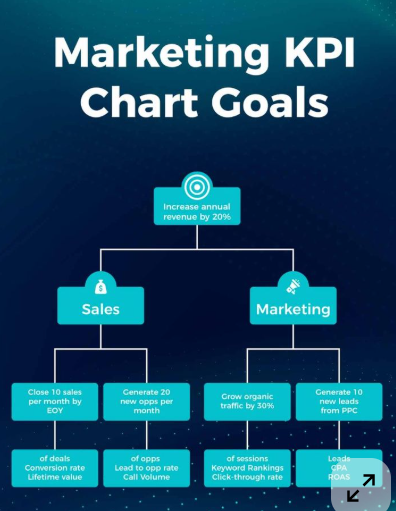
Align KPIs With Business Goals
Marketing KPIs should align with broader business objectives.
Examples:
Goal → Increase sales
KPI → Conversion rate and revenue growth
Goal → Build brand awareness
KPI → Website traffic and social media reach
Focus on Actionable Metrics
Choose metrics that provide meaningful insights and guide decision-making.
Avoid tracking too many irrelevant metrics.
Set Realistic Targets
Establish achievable KPI benchmarks based on past performance and industry standards.
Unrealistic targets may lead to inaccurate evaluations.
Monitor KPIs Regularly
Marketing performance should be monitored regularly.
Weekly or monthly reporting helps identify trends and adjust strategies quickly.
Common KPI Tracking Mistakes
Avoid these mistakes when tracking digital marketing performance.
Tracking Too Many Metrics
Focusing on too many KPIs can create confusion.
Identify the most relevant metrics for your marketing objectives.
Ignoring Context
Numbers alone do not provide complete insights.
Marketers must analyze trends and external factors influencing performance.
Failing to Act on Data
Tracking metrics is only useful if insights lead to strategic improvements.
Marketers should regularly optimize campaigns based on KPI analysis.
Future of Digital Marketing KPI Tracking
KPI tracking is becoming more sophisticated with advancements in artificial intelligence and automation.
Companies like Google and Microsoft are developing AI-driven analytics tools that automatically analyze data and provide optimization recommendations.
Future marketing dashboards will provide real-time insights, predictive analytics, and automated reporting to help marketers make faster decisions.
Conclusion
Digital marketing KPI tracking is essential for measuring the effectiveness of marketing campaigns and ensuring that marketing investments generate meaningful results. By monitoring key metrics such as traffic, engagement, conversions, and advertising performance, businesses can evaluate their strategies and identify areas for improvement.
Using analytics platforms like Google Analytics, Google Ads, and SEMrush allows marketers to gather valuable insights and optimize campaigns for better performance.
Successful digital marketers rely on data-driven strategies to improve targeting, increase conversions, and maximize return on investment. As marketing technologies continue to evolve, KPI tracking will become even more advanced, enabling businesses to make smarter decisions and achieve long-term growth.